



Online Poker vs Live Poker: Understanding the Core Gameplay
Whether you're seated at a casino table or logged into a poker site, the fundamental rules of poker remain the same. The button moves, bets are made with chips, and core concepts like hand ranges, value betting, and bluffing are universal. However, the similarities end there. The strategic nuances between the two formats are vast, and failing to adapt can be a costly mistake. This guide breaks down the essential differences between online poker and live poker to help you adjust your strategy and thrive in either environment.
Game Speed and Hand Volume
The most immediate difference you'll notice is the pace of the game. An online poker site deals cards, counts chips, and manages the pot instantly. In contrast, a live dealer, no matter how skilled, has to perform these actions manually. This results in a massive discrepancy in hand volume.
- Online Poker: You can play hundreds of hands per hour at a single table. Decisions are often timed, forcing quicker action.
- Live Poker: You might only see 25-30 hands per hour. Players often take longer to think, count chips, and act.
It's not uncommon to play more hands in a single day online than in a full month of live poker. This increased volume makes online poker an excellent training ground for gaining experience quickly.
Player Skill and Competition Level
Generally, the competition at the same stakes is significantly tougher online. Online games attract more serious players who study strategy and use software to analyze their play. Live games, especially at lower stakes, tend to be more recreational and social, attracting a wider range of less experienced players.
This means a winning strategy at a live $1/$2 game might not be profitable at an online $1/$2 (NL200) table. When transitioning between formats, it's wise to start at lower stakes to adjust to the new player pool.
Multi-Tabling: The Online Advantage
One of the biggest draws of online poker is the ability to play multiple tables at once, a practice known as multi-tabling. While a professional might attempt to play two tables live, it's logistically challenging and rarely successful.
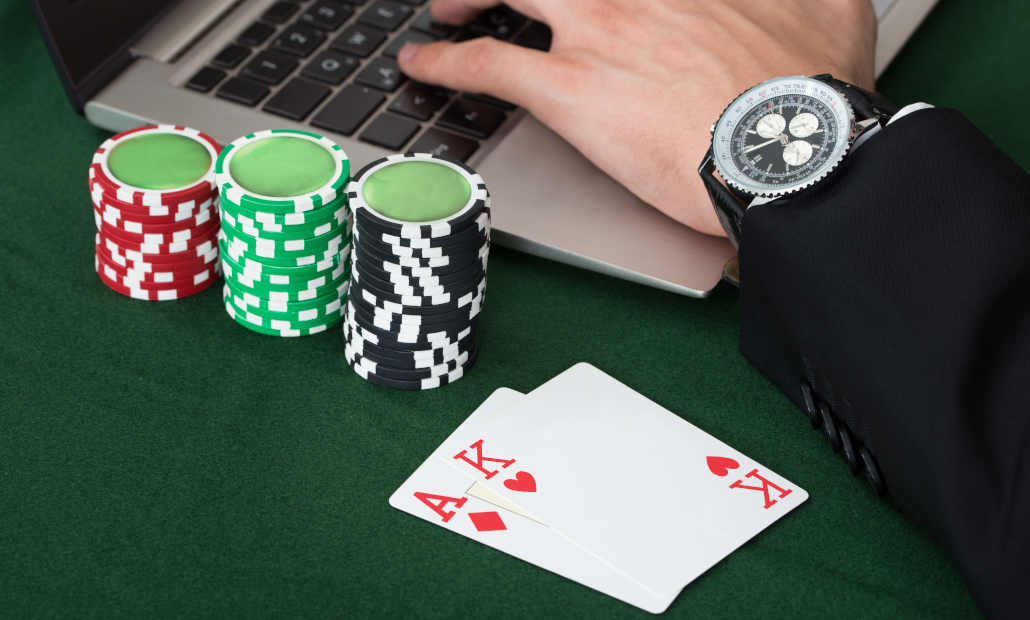
Online poker software is designed for multi-tabling, allowing you to tile or stack several tables on your screen. This drastically increases the number of hands you play per hour, which can smooth out variance and increase your potential win rate.
The Art of the Tell: Physical vs. Digital
Reading opponents is a critical skill in both formats, but the methods are entirely different.
Live Poker Tells
In a live setting, you can observe physical tells. Watch for changes in breathing, nervous hand movements, eye contact (or lack thereof), and how a player handles their chips. These physical cues can offer valuable clues about the strength of their hand.
Online Poker Tells
Online, physical tells are non-existent. Instead, you must rely on betting patterns and timing. For example:
- Timing Tells: A player who instantly checks might have a weak hand and be on auto-pilot. Conversely, a long pause (a 'tank') followed by a small bet could signal weakness, while a tank followed by a large raise might indicate a monster hand or a calculated bluff.
- Bet Sizing: Consistent patterns in bet sizing can reveal a lot. Does a player bet small with draws and large with made hands? Tracking these habits is key.
Playing online improves your technical skills, forcing you to focus on math, game theory, and hand ranges.
Game Dynamics: Aggression and Pot Types
The overall flow of the game also differs. Live games often see more limping and multiway pots, where several players see the flop. Players are often looser and more willing to call with speculative hands, hoping to hit something big.

Online poker is typically more aggressive, with more pre-flop raising. This leads to more heads-up pots (only two players seeing the flop). As a result, pulling off a large bluff can be more difficult online, as players are more attuned to aggressive lines and pot odds.


