



How Do Casinos Make Money? It Starts with Math
There’s a good reason why the saying 'the house always wins' has stood the test of time. No matter how large a jackpot some lucky players take home, casinos are structured to remain profitable in the long run. This isn't due to luck, but a carefully calculated business model. So, how do casinos make money consistently? The answer lies in a core concept: the house edge.
What is the Casino House Edge?
If you've spent any time around gambling, you've likely heard of the house edge. In simple terms, it's the casino's built-in advantage over the player in every game. This mathematical advantage ensures that, over millions of bets, the casino will keep a predictable percentage of the money wagered. No matter how well you play or what strategy you use, this edge is always present.

Whether you're playing online or in a land-based venue, from slot machines to table games, you're competing against the house edge. The key is to understand which games offer better odds.
To be fair, for some games, the edge is low, and for some, it’s higher, but the constant theme is that it’s always there. Smart players choose games with a lower house edge to improve their chances.
Here’s a quick breakdown of the typical house edge for popular casino games:
- French Roulette: 2.70%
- American Roulette: 5.26%
- Blackjack: As low as 0.5% with optimal strategy
- Baccarat: Up to 15.75% depending on the bet
- Craps: Up to 16.67% depending on the bet
- Keno: 20% to 40%
- Slots: 2% to 15%
- Video Poker: Less than 0.5% with optimal strategy
Hold Percentage vs. House Edge: A Deeper Look
While the house edge is a theoretical percentage, the hold percentage is what the casino actually keeps. This figure represents the total amount a specific game earns for the house from all players over a certain period. The hold percentage is a more practical measure of the gambling business model in action.
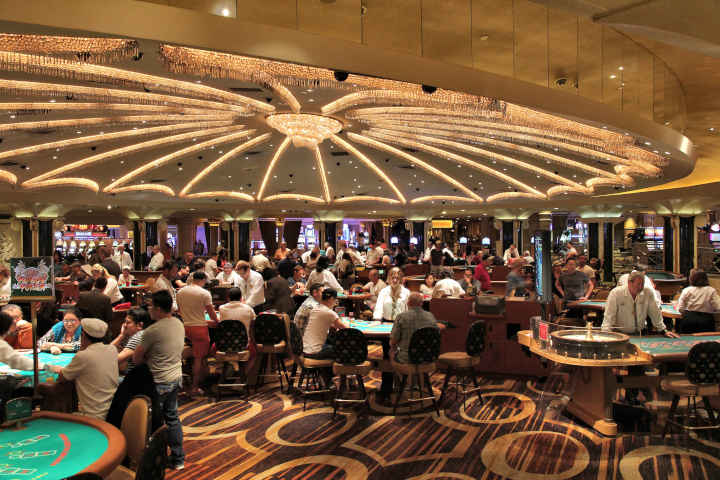
It’s important to distinguish the hold percentage from the house edge because the hold is always much larger. For example, while blackjack's house edge might be just 0.5%, the casino's hold on that game could be 10% or more. This happens because players cycle through their money, betting it multiple times, which exposes their bankroll to the house edge repeatedly. This is why casinos measure their real profits based on the hold percentage.
Beyond the Games: Other Ways Casinos Make Money
A casino's revenue isn't solely tied to gaming losses. They are masters at creating an immersive environment designed to encourage spending. They are not just selling games; they are selling an experience and an escape from reality.
Casinos know that they’re selling you an escape from reality, a fun night in town, or a promise to win more money than you’ve ever dreamt of. This experience comes at a price.
While you might enjoy complimentary drinks or other perks, the casino's business model accounts for these costs. Other significant casino revenue streams include:
- Amenities: Hotel rooms, spa services, and resort fees.
- Food and Beverage: High-end restaurants, casual eateries, and bars.
- Entertainment: Shows, concerts, and nightclub cover charges.
- Retail: On-site shopping outlets.
In conclusion, the house always wins because its entire operation is designed for profitability. From the mathematical certainty of the house edge to the lucrative non-gaming amenities, every aspect of the casino is a revenue-generating machine. The best approach for a player is to gamble responsibly, play for fun, and never expect to win.


