
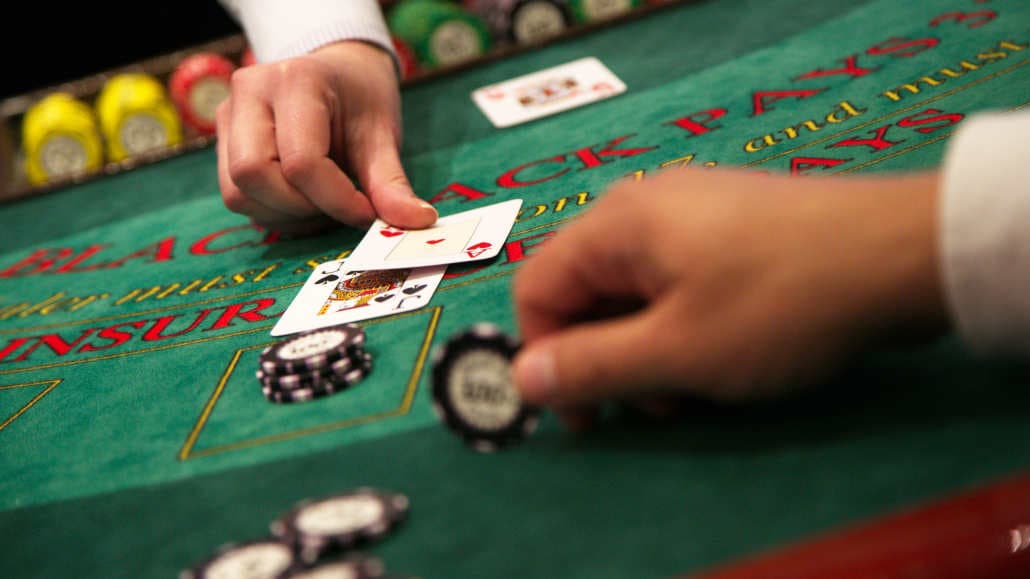


Why Are Blackjack Hand Signals Important?
Using hand signals for blackjack isn't just about looking like you know what you're doing; it serves critical functions at the table. These gestures are an essential part of casino procedure for several key reasons, protecting both the house and the players.
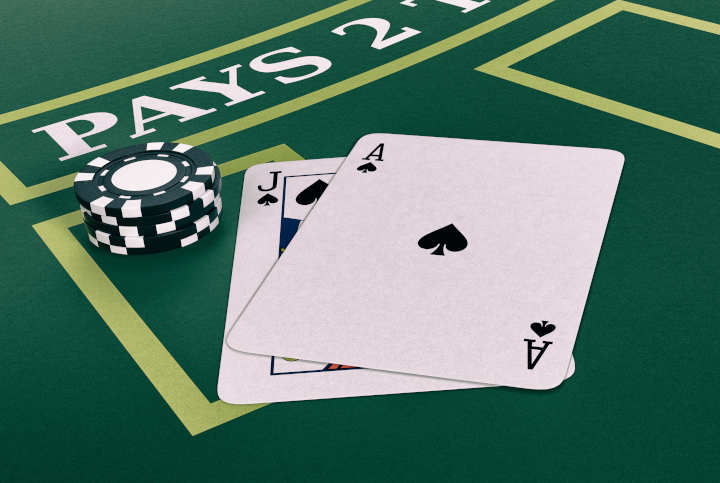
First, they provide a clear visual record for the casino's security cameras, often called the 'eye in the sky.' Since cameras don't record audio, your gestures are the only undisputed proof of your decisions. If a dispute arises with the dealer over a play, the security footage of your blackjack signals can be reviewed to resolve it fairly.
Second, using established blackjack gestures significantly speeds up the game. Verbal declarations can slow things down, but a quick, universally understood signal keeps the cards moving and the game flowing smoothly for everyone at the table.
Finally, it makes the dealer's job easier. With multiple players to manage, a dealer can easily see a clear hand motion, ensuring your intended action is executed without confusion or delay.
A Complete Guide to Blackjack Hand Signals
Learning the core hand signals for blackjack is straightforward. While there are slight variations, particularly between 'face-up' and 'face-down' games, the main gestures are consistent across most casinos. Here’s a complete rundown of the signals you need to know.
Hit: Requesting Another Card
When you 'hit,' you are asking the dealer for another card. The signal for this action depends on how the cards were dealt.
- Face-Up Games: In most games, where your cards are dealt face-up, you simply tap the table with your index finger. You can tap once for each card you want.
- Face-Down Games: If your cards are dealt face-down, gently scrape the corner of your cards on the felt towards you. This indicates to the dealer you'd like another card.
Stand: Keeping Your Hand
To 'stand' means you are satisfied with your hand and do not want any more cards. This ends your turn.

- Face-Up Games: Wave your open hand horizontally over your cards. This is a universal signal for 'no more.'
- Face-Down Games: Tuck your cards face-down under your bet in the betting circle. Be careful not to disturb your chips.
Double Down: Doubling Your Bet for One Card
A 'double down' is a strategic move where you double your initial wager in exchange for receiving only one more card. The signal is the same for both face-up and face-down games.
To signal a double down, place a second wager equal to your original bet next to it, outside the betting box. Then, simply point at your bet with one finger. If you are in a face-down game, you must turn your cards face-up first.
Split: Creating Two Hands from a Pair
If you are dealt two cards of the same value (e.g., two 8s or two Kings), you have the option to 'split' them into two separate hands. This requires a second bet equal to your first.
To indicate a split, place your matching second wager on the layout. Then, make a 'V' sign with your index and middle fingers and point it towards your cards. The dealer will then separate your cards to create two new hands.
Surrender: Forfeiting Your Hand
The 'surrender' option allows you to fold your hand and forfeit only half of your bet, which is a good move if you have a very weak hand against a strong dealer upcard. Not all tables offer this option.
While often announced verbally, the generally accepted blackjack gesture for surrender is to draw a horizontal line on the felt behind your bet with your index finger. This signals your intention to give up the hand.
Insurance: A Side Bet on Dealer Blackjack
When the dealer's upcard is an Ace, you may be offered 'insurance,' which is a side bet that the dealer has blackjack. There is no official hand signal for insurance. This action is almost always handled verbally. The dealer will ask the table, "Insurance?" and you must respond verbally if you wish to take the bet.
Ready to Play?
Now that you know the five essential blackjack hand signals, you're prepared to approach a casino table with confidence. Remember these key gestures, and you'll fit right in. If you're ever unsure, don't hesitate to ask the dealer for clarification. You can also state your action verbally while making the corresponding gesture to ensure there's no confusion as you practice and build your skills.


