


What is Card Counting in Blackjack?
Counting cards in blackjack is a strategy used to determine whether the next hand is likely to give an advantage to the player or the dealer. Unlike games of pure chance like roulette, blackjack's odds change as cards are dealt. By keeping a mental tally of the high and low-value cards, a skilled player can identify when the deck is rich in aces and 10s, increasing their bets to capitalize on the favorable odds.
While perfect basic strategy gets you close to a 50/50 game, the house still holds a slight edge of about 0.5%. Card counting is the key to erasing that edge and tilting the odds in your favor. It's not about memorizing every card, but about tracking the ratio of high to low cards left in the deck.
It may sound like something from a movie, but turning the tables on the casino is entirely possible in blackjack. With the right technique and discipline, you can become a favorite to win.
The Origins of Card Counting
The concept of card counting was brought to the public by mathematician Edward O. Thorpe. Fascinated by probability, Thorpe saw blackjack as a puzzle that could be solved. He discovered that the house edge was so thin that removing just a few low-value cards from the deck could make the player the favorite, assuming perfect strategy was used.

This insight led him to develop a systematic way to track the composition of the remaining deck. In 1962, he published his groundbreaking book, "Beat the Dealer," which laid out the first comprehensive card counting system. It became an instant classic and proved that a player could, in fact, beat the casino at its own game.
How to Count Cards: The Hi-Lo System Explained
At its core, card counting is simpler than it sounds. You don't need to be a math genius or have a photographic memory. The most common method, the Hi-Lo system, assigns a value to each card dealt.
Your goal is to maintain a "running count" based on the cards you see. Here’s how the values are assigned:
- Cards 2, 3, 4, 5, 6: Add +1 to your count (these are "low cards").
- Cards 7, 8, 9: The count remains unchanged (value is 0).
- Cards 10, Jack, Queen, King, Ace: Subtract 1 from your count (these are "high cards").
You start at zero when a new shoe is introduced. Every time a card is dealt to any player, including the dealer, you adjust your mental count. A positive running count means more high cards are left in the deck, which is great for the player. This increases the chances of getting a blackjack and the dealer busting.
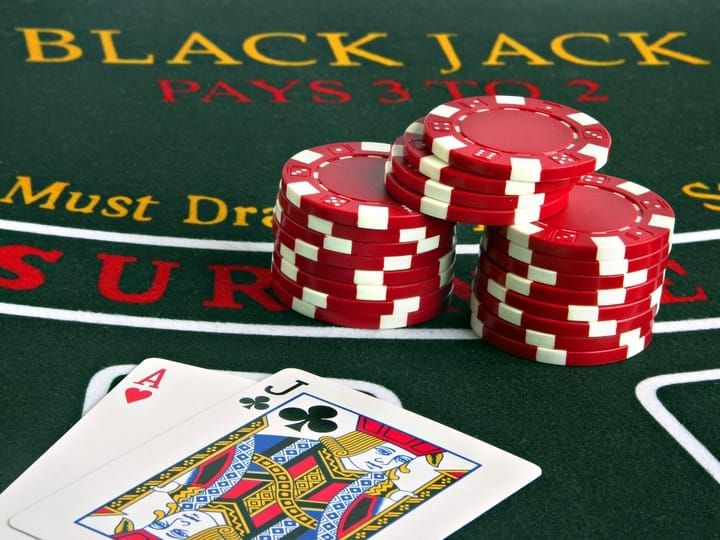
When the running count is high, you should increase your bets. When it's neutral or negative, you should bet the table minimum.
From Running Count to True Count
In the early days, blackjack was dealt from a single deck, making the running count a very powerful tool. Casinos quickly caught on and introduced multi-deck games, dealt from a "shoe," to dilute the effectiveness of card counting. Today, most games use six or eight decks.
By adding more decks, casinos made it harder for counters to gain an advantage. This is where the concept of the "true count" becomes essential.
The true count gives you a more accurate measure of your advantage by accounting for the number of decks remaining. To calculate it, you simply divide your running count by the number of decks left in the shoe.
True Count = Running Count / Decks Remaining

For example, a running count of +6 is very strong with only one deck left (True Count = +6). However, with six decks remaining, it's much weaker (True Count = +1). You should base your betting decisions on the true count, not the running count, to play optimally.
Advanced Strategy: Playing as a Team
The real money in card counting comes from betting big when the count is high. However, drastically changing your bet size from minimum to maximum can alert casino staff. To avoid detection, sophisticated players often work in teams.
A typical team structure involves:
- The Spotter: Sits at a table, plays the minimum bet, and keeps the count. Their job is to stay under the radar.
- The Big Player: Roams the casino floor, appearing as a casual high-roller. When a spotter signals that a table is "hot" (has a high true count), the big player joins and immediately starts placing large bets.
This approach makes the large bets seem natural, as the big player wasn't there to see the deck go from cold to hot. It requires seamless communication and trust, but it's a highly effective way to maximize profits while minimizing risk of being banned.
Is Blackjack Card Counting Legal?
This is one of the most common questions, and the answer is simple: yes, counting cards is legal. You are using your brain to play the game skillfully, which is not cheating. Courts have consistently ruled that using mental skill alone does not constitute fraud.
However, while legal, casinos are private establishments and reserve the right to refuse service to anyone. If they suspect you're counting cards, they can ask you to stop playing blackjack or leave the property entirely.
It's crucial to distinguish between legal card counting and illegal cheating. Using any external device, like a phone app or hidden computer, is illegal and can lead to severe penalties, including jail time. As long as you stick to using your mind, you are not breaking any laws.
The Legendary MIT Blackjack Team
No discussion of card counting is complete without mentioning the MIT Blackjack Team. Formed in 1979 by a group of students from MIT and other elite universities, this team turned card counting into a sophisticated and profitable business.
For over two decades, various iterations of the team used advanced counting systems, team strategies, and a significant bankroll to win millions from casinos in Las Vegas, Atlantic City, and worldwide. Their story proved on a grand scale that card counting works and can be incredibly lucrative.
Their exploits were famously chronicled in the book "Bringing Down the House" and adapted into the Hollywood movie "21," bringing the once-secretive world of card counting into the mainstream.
Does Card Counting Still Work Today?
Even though casinos have implemented countermeasures like 6-8 deck shoes, continuous shuffling machines, and advanced surveillance, counting cards in blackjack is still a valid and effective strategy. The underlying math hasn't changed.
Success today requires more dedication, discipline, and discretion than it did in Thorpe's era. You must master basic strategy, perfect your counting skills, and learn to blend in. It’s not a get-rich-quick scheme, but for those willing to put in the effort, it remains one of the few beatable games in the casino.


