
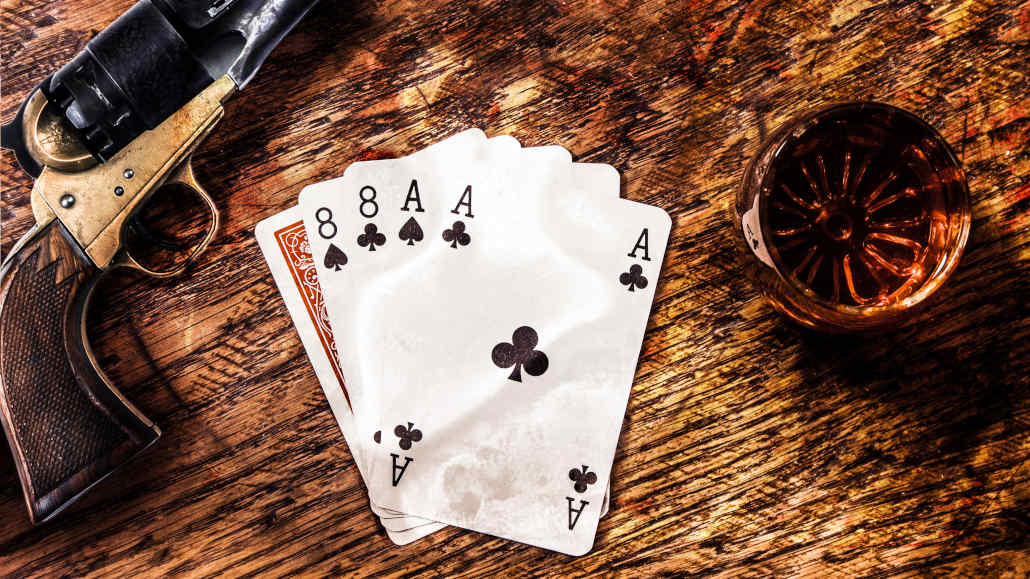


What is the Dead Man's Hand?
The Dead Man's Hand is a famous gambling term for a two-pair poker hand consisting of two black aces and two black eights. Its name originates from the Wild West legend surrounding the death of James Butler Hickok, better known as "Wild Bill" Hickok, a renowned lawman, gunfighter, and gambler.
The story unfolds in August 1876, in Nuttall & Mann’s Saloon in Deadwood, Dakota Territory. Wild Bill Hickok was playing five-stud poker when a man named Jack McCall joined the game. McCall, heavily intoxicated, quickly lost his money to Hickok. In a show of either pity or condescension, Hickok gave McCall enough money for a meal and advised him not to play again until he could cover his debts.
The very next day, Hickok returned to the same saloon. This time, however, he couldn't get his preferred seat with his back against the wall. Jack McCall entered, walked up behind Hickok, and shot him in the back of the head, killing him instantly.
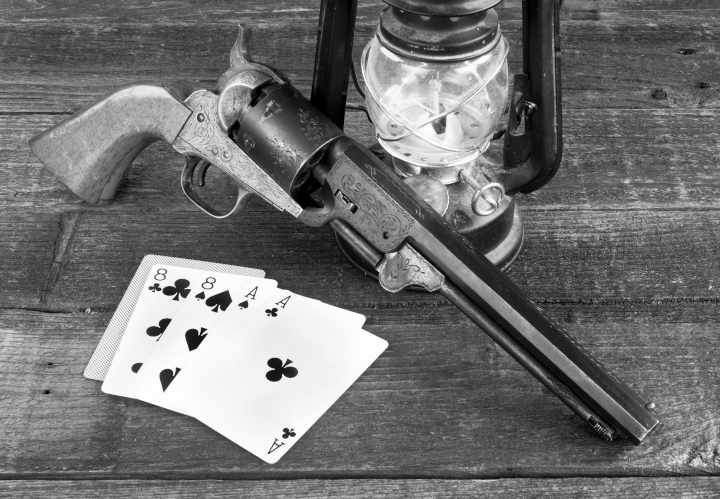
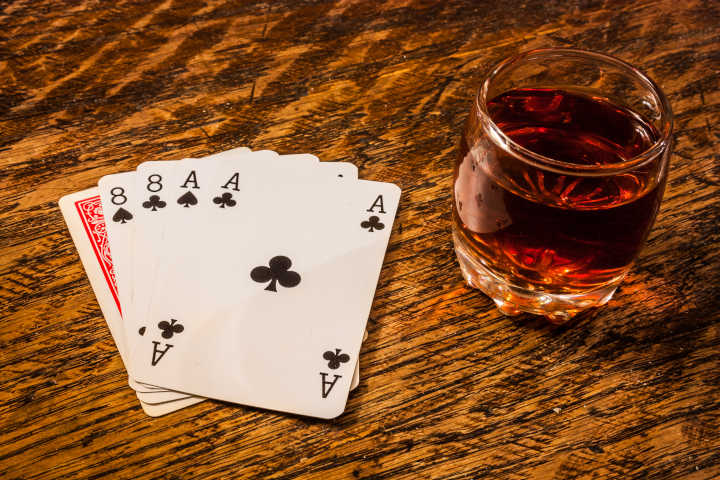
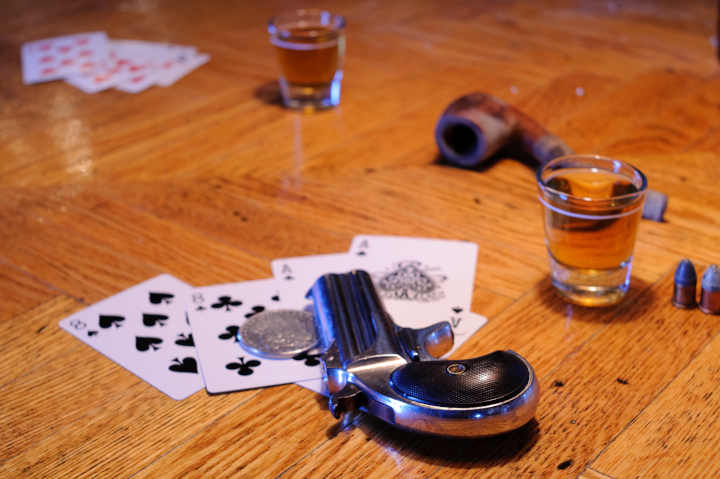
When Hickok slumped over the table, he revealed his cards: two black aces and two black eights. The identity of his fifth card remains a historical mystery, which is why the Dead Man's Hand is almost always depicted as a four-card hand.
The Legend vs. The History
While the story is iconic, its historical accuracy is debated. The earliest reliable reference to the term "Dead Man's Hand" dates to 1886, but it described a full house of three jacks and two tens. The term wasn't connected to Wild Bill Hickok's death until the 1920s, solidifying in popular culture with the 1926 book Wild Bill Hickok: The Prince of Pistoleers.
Who Was Wild Bill Hickok?
A key reason the legend of the Dead Man's Hand survived is because of Wild Bill Hickok himself. He was already a living legend on the American frontier, known as a soldier, scout, and formidable lawman. His reputation as a gunfighter was immense, though many tales of his exploits were likely exaggerated. His fame ensured that the story of his dramatic death would spread far and wide, cementing his status as a Wild West icon.
Why Did Jack McCall Shoot Wild Bill Hickok?
The true motive behind Jack McCall's actions remains unknown, fueling decades of speculation. The most common theory is that McCall was a sore loser, seeking revenge for his losses and humiliation at the poker table. Another story suggests he was avenging his brother's death at Hickok's hands. Regardless of the reason, McCall was able to get the drop on Hickok because of a rare lapse in the lawman's caution.
Hickok was famously paranoid and always sat with his back to a wall to see the entire room. On that fateful night, no such seat was available, forcing him into a vulnerable position. McCall seized the opportunity, shouting, "Damn you! Take that!" as he fired the fatal shot.
Was Jack McCall Caught?
Yes, Jack McCall was captured almost immediately. His escape attempt failed comically when he fell off his horse due to a loosened saddle. He faced an impromptu trial in Deadwood, where a jury of local miners found him not guilty. However, McCall couldn't resist bragging about his deed. After leaving town, he was re-arrested by federal authorities in Wyoming, who did not recognize the verdict of the unofficial Deadwood court. McCall was tried again, found guilty, and hanged in March 1877.
The Dead Man's Hand in Popular Culture
The legend of aces and eights has permeated popular culture for over a century. It's a popular theme for tattoos and has appeared in countless movies, songs, books, and video games.
- Movies: It was referenced in classic westerns like Stagecoach (1939) and The Man Who Shot Liberty Valance (1962).
- Music: Famous songs like Motörhead's "Ace of Spades" and Bob Dylan's "Rambling, Gambling Willie" allude to the hand.
- Games: Video games like Fallout: New Vegas and Hearthstone have included direct references.
- Insignia: Variations of the hand are used as insignia by several law enforcement and military units, including the Las Vegas Metropolitan Police Department Homicide Division.
Perhaps the most detailed portrayal is in the HBO series Deadwood, which vividly depicts the lawless town and the events leading up to Hickok's murder.
How to Play the Dead Man's Hand
While the legend is tied to five-card stud, the hand is more commonly discussed today in the context of Texas Hold'em, where you might be dealt an ace and an eight as your starting cards. This hand, Ace-Eight, is considered marginal. Its strength depends heavily on your position at the table and the community cards.
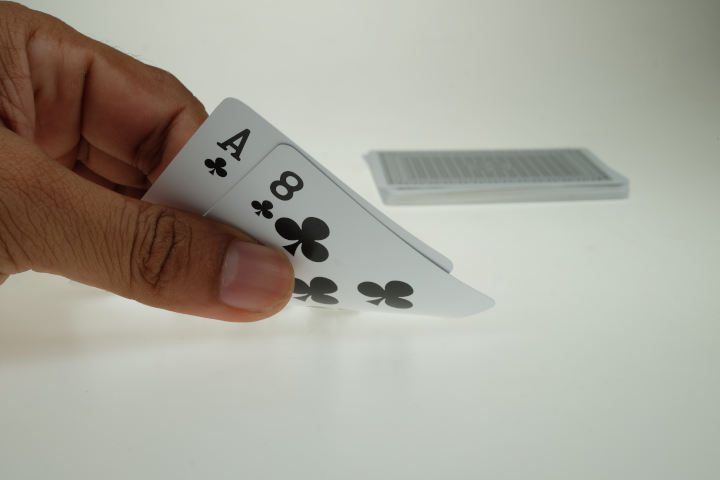
From a late position, it can be a reasonable hand to play, but from an early position, it's often best to fold, especially against a raise. If the flop brings an ace, you have a top pair, but your weak 'eight' kicker could get you into trouble against another player holding an ace with a better kicker. Despite its legendary status, many poker players consider it an unlucky hand due to its history and tricky gameplay.


