


The Artist Behind the Easel: Cassius Marcellus Coolidge
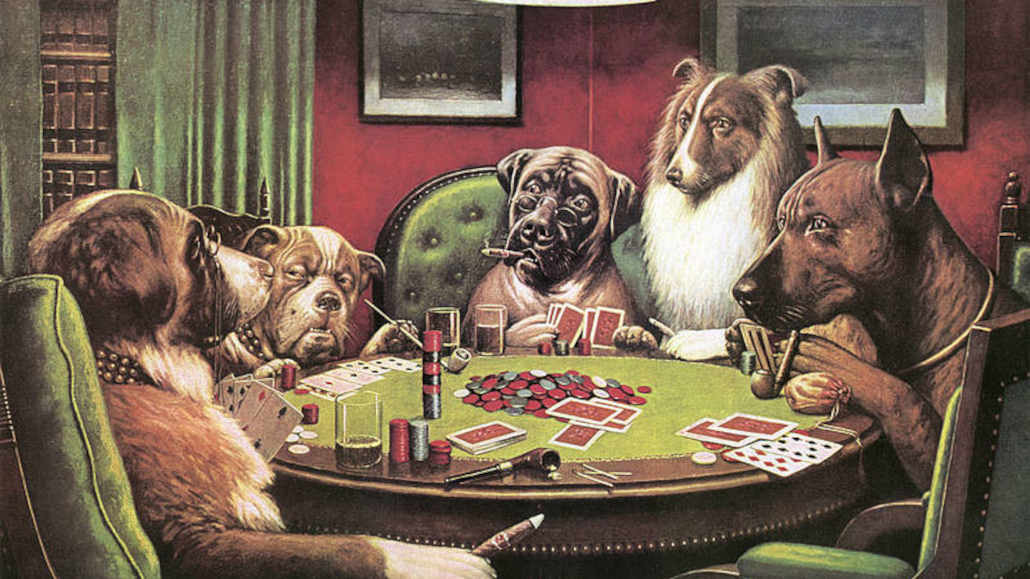
Even if you aren't an art aficionado, you've likely seen the iconic image of dogs sitting around a card table, deep in a game. The Dogs Playing Poker series is a staple of American pop culture, but the artist behind it, Cassius Marcellus Coolidge, remains surprisingly obscure. Often called “the most famous American artist you’ve never heard of,” Coolidge's journey was far from conventional.
Born in 1844, Coolidge had no formal art training and worked various jobs, including pharmacist and even a newspaper founder, before finding his niche. He began painting dogs in comical human situations early in his career, but it wasn't until his 50s that his work gained significant recognition. His unique style, which humanized dogs in relatable scenarios, struck a chord with the public, even if it never won over the highbrow art world.
The Dogs Playing Poker Series: More Than One Painting
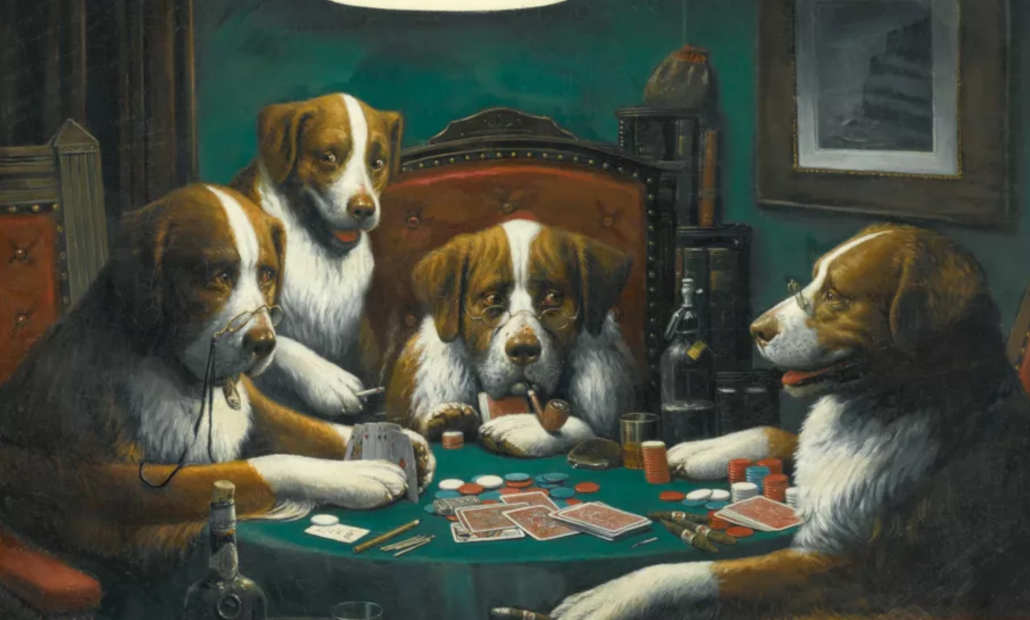
Many believe Dogs Playing Poker is a single painting, but it's actually a collection of eighteen pieces. The first, titled Poker Game (1894), set the stage. Its popularity led to a commission from advertising firm Brown & Bigelow, for whom Coolidge created sixteen calendar paintings between 1903 and the mid-1910s. An eighteenth painting, Looks Like Four of a Kind, was completed in 1910.
The sixteen paintings created for the advertising calendars were:
- A Bachelor’s Dog
- A Bold Bluff
- Breach of Promise Suit
- A Friend in Need
- His Station and Four Aces
- New Year’s Eve in Dogville
- One to Tie Two to Win
- Pinched with Four Aces
- Poker Sympathy
- Post Mortem
- The Reunion
- Riding the Goat
- Sitting Up with a Sick Friend
- Stranger in Camp
- Ten Miles to a Garage
- A Waterloo
While most feature card games, some depict other humorous scenes, like a courtroom trial in Breach of Promise Suit, showcasing Coolidge's creative freedom.
'A Friend in Need': A Masterpiece of Canine Deception
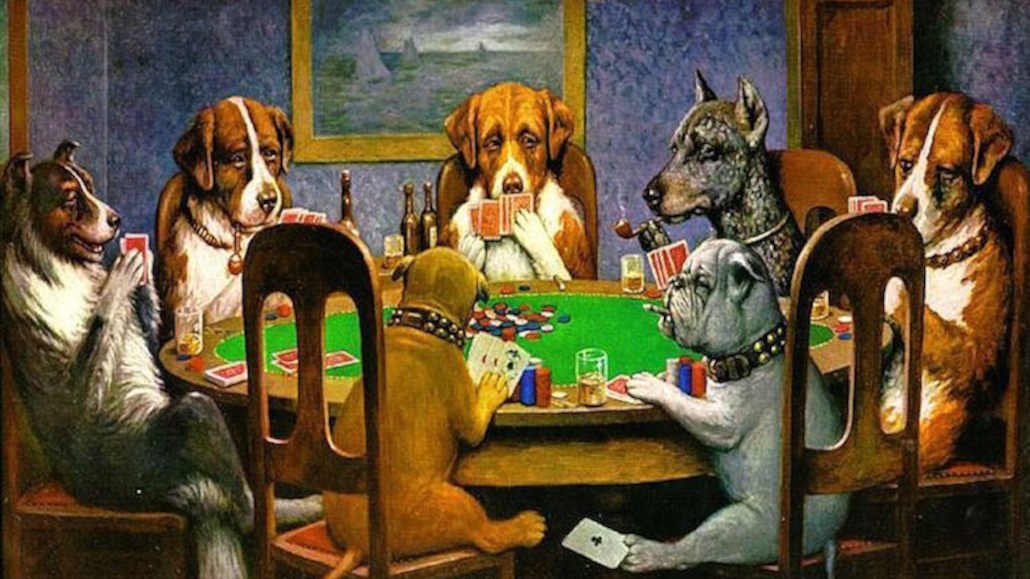
Among the entire collection, A Friend in Need (1903) is arguably the most famous and widely reproduced. It captures a tense moment where one bulldog subtly passes an ace to another under the table, while the other players seem suspicious. This relatable scene of friendly cheating and camaraderie has made it an enduring favorite.
From Pop Culture Icon to Auction Block
The series has been featured in countless TV shows like Cheers and The Simpsons, movies, and music videos. This exposure cemented its place in pop culture but also led to its reputation as kitsch, or novelty art, rather than fine art. Despite this, the original paintings are highly valued. In 2015, the original Dogs Playing Poker painting from 1894, Poker Game, sold for an astonishing $658,000 at auction. A decade prior, two others, A Bold Bluff and Waterloo, sold as a pair for $590,400.
Other Iconic Gambling Paintings
While Coolidge's work is unique, the theme of gambling has inspired artists for centuries. Here are a few other noteworthy gambling paintings:
The Cardsharps by Caravaggio
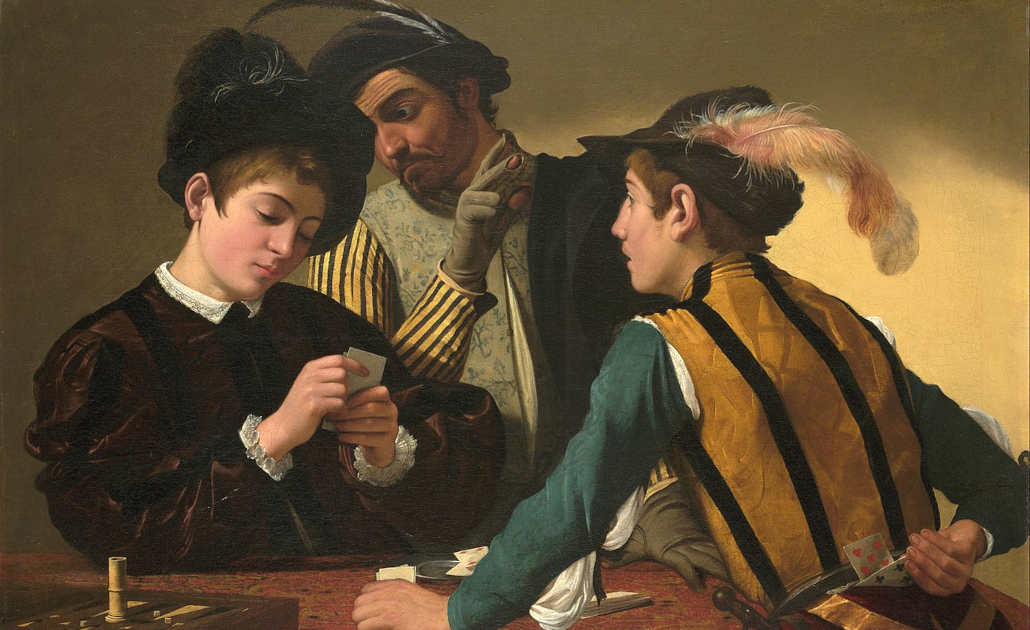
Painted around 1594, this Baroque masterpiece shows an innocent young man being cheated by two hustlers. Caravaggio’s dramatic use of light and shadow captures the raw tension of street-level gambling.
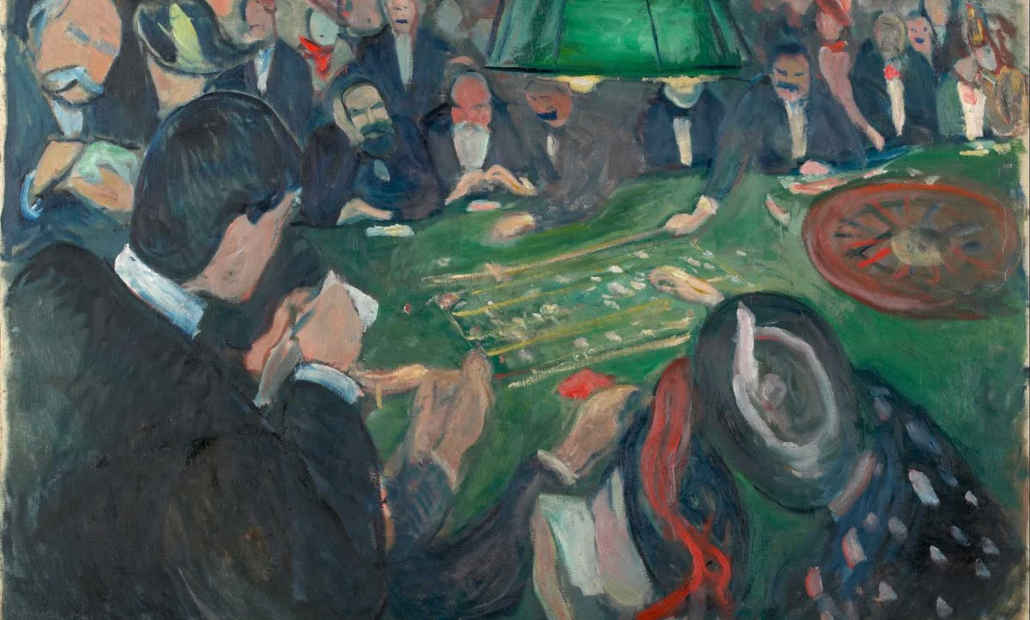
At the Roulette Table in Monte Carlo by Edvard Munch
Known for The Scream, Norwegian artist Edvard Munch also captured the darker side of gambling. Inspired by his own visits to the casino, this painting depicts the despair and anxiety surrounding a roulette table, a stark contrast to Coolidge's lighthearted scenes.
A Legacy Worth Remembering
Though critics may dismiss Coolidge's work, its enduring appeal is undeniable. The Dogs Playing Poker series is amusing, relatable, and a genuine piece of Americana. It proves that art's purpose is not just to hang in a gallery but to entertain and connect with people, a goal Coolidge achieved flawlessly.


