


What is a Set in Poker? A Clear Definition
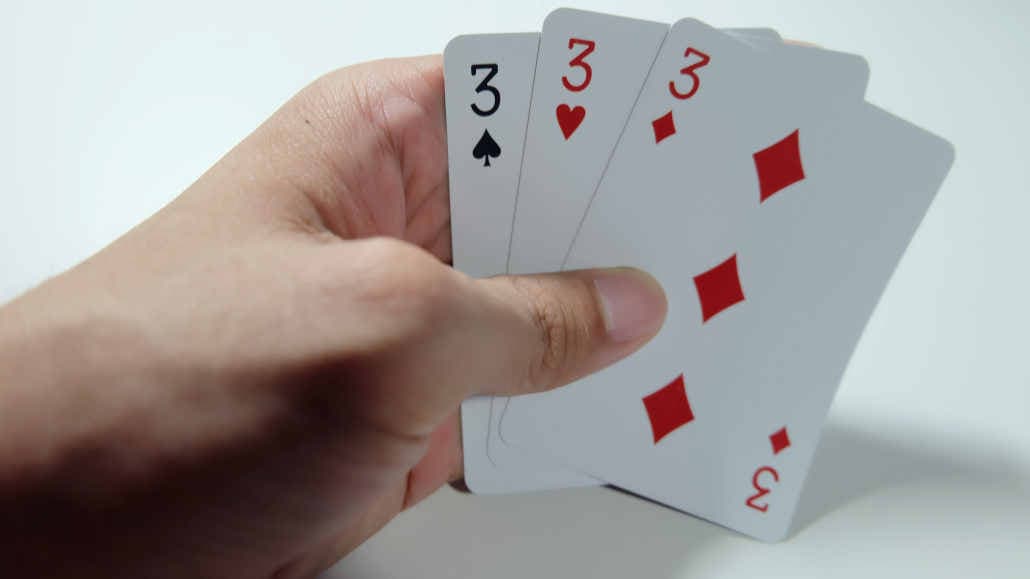
Understanding key terminology is crucial for success in games like Texas Hold'em and Omaha. One of the most important terms to grasp is a set in poker. A set is a three-of-a-kind poker hand made specifically with two of your hole cards (a pocket pair) and one community card. Its strength lies in its concealment, as opponents often won't suspect you have such a powerful hand.
For example, imagine you are dealt 8♠ 8♥. The flop comes down A♣ K♦ 8♦. You have successfully made a set of eights. Your hand is incredibly strong, but the board itself doesn't look particularly dangerous to an opponent holding A♥ Q♥ (top pair).
The Crucial Difference: Set vs. Trips
New players often confuse a set with 'trips', another term for three-of-a-kind. While both hands have the same rank, their formation and strategic implications are vastly different. Understanding the poker set vs trips distinction is fundamental to your strategy.
- Set: Formed with a pocket pair and one board card (e.g., you have 5-5, board is 5-J-Q).
- Trips: Formed with one hole card and two board cards (e.g., you have A-K, board is K-K-7).
Sets are considered superior because they are much harder for your opponents to identify. When two matching cards are on the board, any player with a single matching card has trips, so everyone is more cautious. A set, however, is a hidden monster.
A set is a monster in disguise; trips scream their strength from the board. An experienced player always prefers the set for its ability to extract maximum value.
Here is a simple breakdown of the differences:
| Feature | Set | Trips |
|---|---|---|
| Formation | 1 Pocket Pair + 1 Board Card | 1 Hole Card + 2 Board Cards |
| Concealment | Excellent (Hidden) | Poor (Obvious) |
| Relative Strength | Higher (less likely for others to have) | Lower (more likely for others to have) |
| Example | You hold 9-9, Flop is 9-K-2 | You hold A-9, Flop is 9-9-4 |
Mastering Set Mining: A Winning Poker Strategy
A popular and profitable Texas Hold'em strategy is set mining poker. This involves playing a small or medium pocket pair pre-flop with the primary goal of hitting a set on the flop. If you miss, you typically fold to any significant bet.
The Odds of Hitting a Set
The probability of hitting your set on the flop when holding a pocket pair is approximately 12%, or about 1 in 8.5 times. Because you will miss the vast majority of the time, set mining is only profitable under specific conditions, primarily related to stack sizes. You need to be sure that when you do hit your set, you can win a big enough pot to cover the smaller losses from the times you missed. This concept is tied to implied odds.
When to Set Mine
A common guideline is the '5-10 Rule'. You should only call a pre-flop raise to set mine if the bet is no more than 5% of the effective stack size (the smaller stack between you and your opponent), and you can potentially win at least 10 times your initial investment. If you have a deep stack, set mining becomes a very powerful tool in your arsenal.
How to Play Your Set for Maximum Value
So, you've hit your set on the flop. Now what? The goal is to build the pot and extract as much money as possible from your opponents. Your approach should vary based on the board texture.
Dry Boards
A dry board has few or no flush or straight draws (e.g., K♦ 7♠ 2♣). On these boards, you can consider 'slow-playing' by just checking or making a small bet. This invites opponents to bet or allows them to catch up slightly, so they are more willing to put money in the pot on later streets.
Wet Boards
A wet board is full of draws (e.g., J♥ 10♥ 4♠). Here, you should almost always bet strongly ('fast-play'). You want to charge opponents for drawing to their flushes or straights. Protecting your hand is critical, as a completed draw could beat your set. By betting big, you build a larger pot and deny them the correct odds to continue.
Understanding what a set in poker is, how it differs from trips, and how to use strategies like set mining will significantly improve your game. It's a foundational concept that turns a decent poker hand into a major moneymaker.


