


What Defines American Roulette?
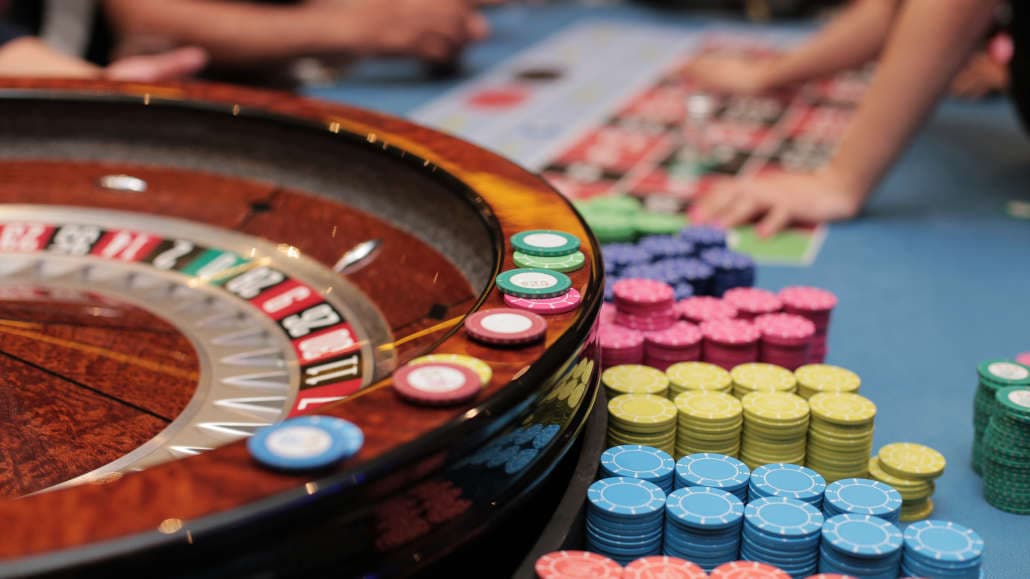
American Roulette is one of the most widely recognized casino table games, especially in North and South America. Its primary defining characteristic is the wheel, which contains 38 numbered pockets. These include the numbers 1-36, a single zero (0), and a double zero (00). This double-zero slot is the key differentiator from European and French roulette and is the reason for the game's higher house edge.
The objective remains simple: predict which pocket the ball will land in after the wheel is spun. Players place their bets on a corresponding layout on the table before the croupier announces "no more bets" and spins the wheel.
The Wheel and Table Layout Explained
The sequence of numbers on an American Roulette wheel is different from its European cousin, designed to create a balance between high and low, red and black, and odd and even numbers. The table layout is where players place their chips. It's a grid representing all possible wagers, which are broadly divided into two categories: inside bets and outside bets.
How to Play a Round of American Roulette
Getting started with American Roulette is straightforward, making it accessible even for beginners. Here's how a typical round unfolds:
- Place Your Bets: Players place their chips on the desired numbers or sections of the table layout. You can make multiple bets on a single spin.
- The Spin: The croupier spins the roulette wheel in one direction and launches the small ball in the opposite direction.
- No More Bets: As the ball begins to slow, the croupier will wave their hand over the table and announce that no more bets can be placed.
- The Result: The ball settles into one of the 38 pockets. The croupier places a marker on the winning number on the table.
- Payouts: The house sweeps away all losing bets and pays out all winning wagers according to the established payout odds.
Understanding the Bets and Payouts
The variety of betting options is a big part of roulette's appeal. In American Roulette, these bets offer different odds and payouts.
Inside Bets
Inside bets are wagers placed on specific numbers or small groups of numbers inside the main grid. They offer higher payouts but have a lower probability of winning.
- Straight Up: A bet on a single number. Pays 35:1.
- Split: A bet on two adjacent numbers. Pays 17:1.
- Street: A bet on a row of three numbers. Pays 11:1.
- Corner (or Square): A bet on four numbers that form a square. Pays 8:1.
- Five-Number Bet: A bet on 0, 00, 1, 2, and 3. This specific bet is unique to American Roulette and has the worst odds for the player, carrying a house edge of 7.89%. It pays 6:1.
- Line (or Six-Number Bet): A bet on two adjacent rows of three numbers. Pays 5:1.
Outside Bets
Outside bets are placed on the sections surrounding the number grid. They cover larger groups of numbers, offering lower payouts but a higher chance of winning.
- Column: A bet on one of the three vertical columns of 12 numbers. Pays 2:1.
- Dozen: A bet on a group of 12 numbers (1-12, 13-24, or 25-36). Pays 2:1.
- Red/Black: A bet on whether the winning number will be red or black. Pays 1:1.
- Odd/Even: A bet on whether the number will be odd or even. Pays 1:1.
- High/Low: A bet on whether the number will be in the low range (1-18) or high range (19-36). Pays 1:1.
The House Edge in American Roulette
The most critical concept for players to grasp is the house edge. The presence of both the '0' and '00' pockets gives the casino its advantage. With 38 total pockets, the true odds of hitting a single number are 37 to 1. However, the casino pays out at 35 to 1. This difference creates a house edge of 5.26%.
This means that for every $100 wagered, the casino expects to keep $5.26 on average over the long run. This is nearly double the 2.7% house edge found in European Roulette, making the American version statistically less favorable for the player.
American vs. European Roulette Comparison
Choosing which version to play often comes down to understanding their core differences. Here’s a direct comparison:
| Feature | American Roulette | European Roulette |
|---|---|---|
| Number of Pockets | 38 | 37 |
| Zeros | 0 and 00 | 0 only |
| House Edge | 5.26% | 2.7% |
| Number Sequence | Unique sequence | Different sequence |
While the payouts for individual bets are the same, the probability of winning is lower in American Roulette because of the extra double-zero pocket. For players focused on maximizing their chances, European roulette is the clear mathematical choice. However, American Roulette remains popular for its availability and the added excitement that some players feel the double-zero brings.


