


Understanding the Concept of Coat-tail Betting
In the world of gambling, you'll encounter numerous terms and strategies, and one of the most interesting is coat-tail betting. The phrase comes from the idiom 'to ride on someone's coattails,' which means to achieve success by associating with another successful person. In a casino, this translates to a player deciding to copy the bets of another player who is experiencing a significant winning streak.
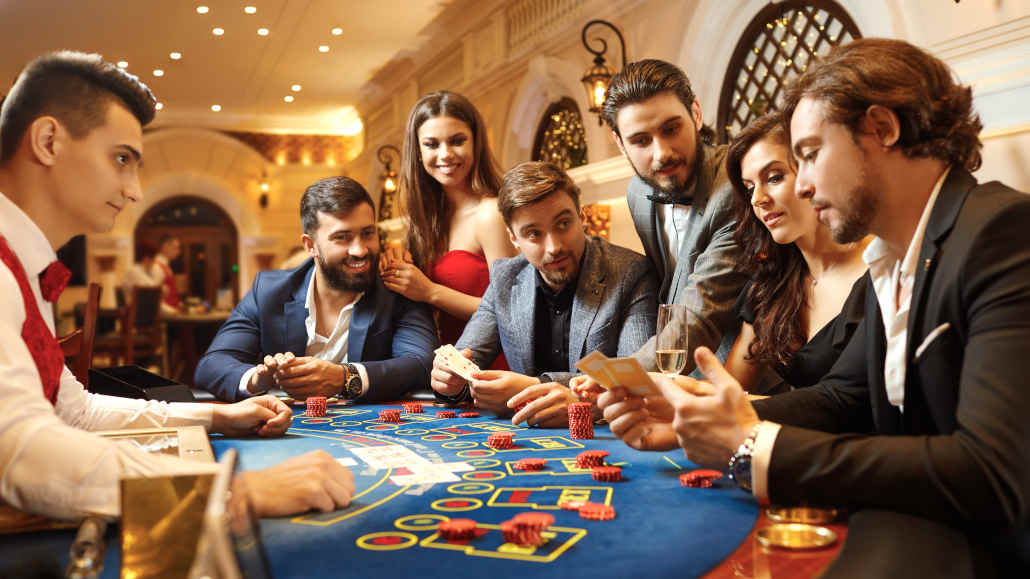
This behavior is often seen at table games where outcomes are shared, creating a communal atmosphere. It's a strategy based on belief in luck and momentum, ignoring the mathematical probabilities that govern casino games. A player might think, 'This person can't lose, so I'll bet exactly what they're betting.'
The Psychology Behind Following a Winner
The decision to engage in coat-tail betting is driven more by psychology than logic. Several factors contribute to this phenomenon:
- The Hot Hand Fallacy: This is the mistaken belief that a person who has experienced success has a greater chance of further success in subsequent attempts. Gamblers see a winning player and assume their luck is a tangible force that can be shared.
- Simplicity: For beginners overwhelmed by complex rules and strategies, simply copying an apparently successful player is an easy path to take. It removes the pressure of decision-making.
- Social Proof: When multiple players start following a winner, it creates a sense of social validation. It feels safer to join the crowd than to bet against a streak.
Which Casino Games Attract Coat-tail Bettors?
While the concept can apply to any game, it's most prevalent in specific settings:
Craps
Craps is the classic example. When a shooter goes on a 'hot roll,' making point after point, the energy at the table is electric. It's extremely common for everyone at the table to place bets with the shooter (Pass Line bets), creating a powerful sense of unity where everyone wins together. Riding the coattails of a hot shooter is a core part of the craps experience for many.
Baccarat
In Baccarat, players often track streaks on scorecards. If the 'Banker' hand has won several times in a row, many players will abandon their own analysis and start betting heavily on the Banker, following the trend until it breaks.
Roulette and Blackjack
At a roulette table, you might see players placing their chips on the same numbers as someone who just won a large payout. In Blackjack, a player might copy the bet size of the table's high-roller, hoping to share in their success, although this ignores the importance of individual card-counting and basic strategy.
Is Coat-tail Betting a Winning Strategy?
From a mathematical standpoint, no. Coat-tail betting is not a viable long-term strategy because past results do not influence future outcomes in games of chance. Each roll of the dice, spin of the wheel, or deal of the cards is an independent event.
"The roulette wheel and the dice have no memory. Believing a player is 'hot' or 'due for a win' is a cognitive bias. A solid strategy always outperforms superstition over the long run."
Following a lucky player does nothing to reduce the house edge. In games like Blackjack, it can be detrimental, as it encourages you to ignore mathematically proven basic strategy in favor of blind faith.
Strategy vs. Superstition: A Comparison
| Aspect | Coat-tail Betting | Basic Strategy (e.g., Blackjack) |
|---|---|---|
| Foundation | Relies on luck, superstition, and observation of others. | Based on mathematical probability and statistical analysis. |
| Effect on Odds | Does not change the house edge or odds of winning. | Aims to minimize the house edge to its lowest possible point. |
| Consistency | Entirely unpredictable; a player's 'streak' can end at any moment. | Provides consistent, mathematically optimal decisions for every hand. |
| Player Agency | Passively follows another player's lead. | Requires active decision-making and knowledge from the player. |
Conclusion: Fun Fad, Not a Financial Plan
Ultimately, coat-tail betting should be viewed as a fun, social aspect of gambling rather than a serious method for making money. It can add to the excitement of a game, especially at a lively craps table. However, players seeking consistent results should invest their time in learning proven strategies that rely on skill and mathematics, not the perceived luck of the person sitting next to them.


