
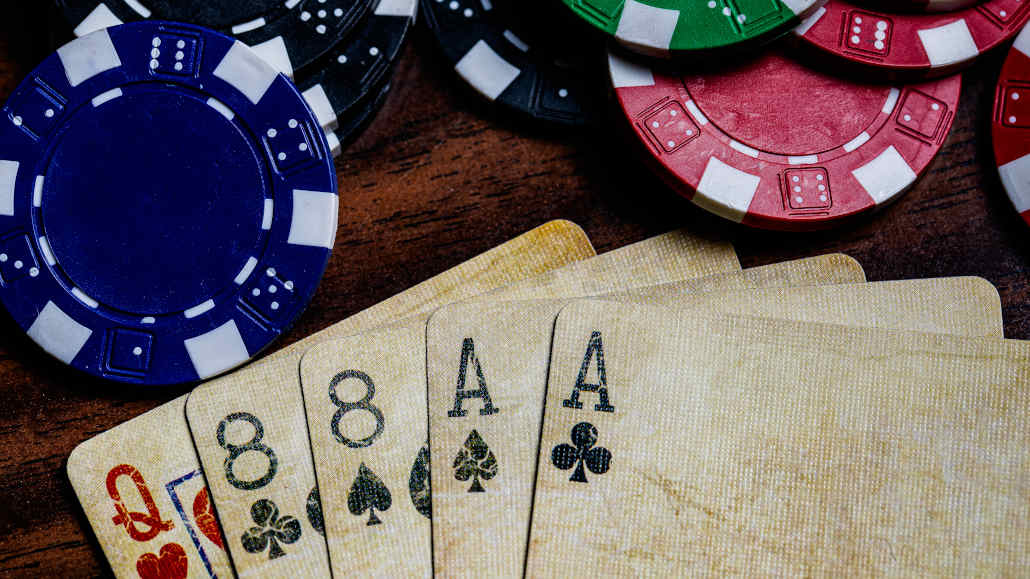


What is the Dead Man's Hand?
In the world of poker, few hands carry as much weight and history as the Dead Man's Hand. This infamous hand specifically refers to a two-pair: two black aces and two black eights. While a two-pair of aces and eights is a strong combination in its own right, its legendary status isn't derived from its statistical strength but from its connection to a pivotal moment in American Old West history. The hand is forever linked to the death of James Butler Hickok, better known as 'Wild Bill' Hickok, a celebrated lawman, gambler, and gunslinger.
The Legend of Wild Bill Hickok's Final Game
The story takes place on August 2, 1876, in Saloon No. 10 in Deadwood, Dakota Territory. Wild Bill Hickok, a known poker enthusiast, sat down for a game of five-card stud. In a fateful break from his usual routine, Hickok couldn't find his preferred seat, which was always in a corner where he could see the entrance and keep his back to a wall. He reluctantly sat with his back to the door.
During the game, a disgruntled gambler named Jack McCall entered the saloon, walked up behind Hickok, and shot him in the back of the head, killing him instantly. As Hickok slumped over the table, the cards he held fell to the floor: two black aces and two black eights. This hand composition became cemented in history as the Dead Man's Hand.
"Wild Bill's final hand wasn't just a collection of cards; it became a symbol of fate, risk, and the untamed spirit of the frontier. Every time a player gets aces and eights, they're holding a piece of poker folklore."
The Unsolved Mystery of the Fifth Card
While historians and poker players agree on the four main cards of the aces and eights, the identity of the fifth card, or 'kicker,' remains a subject of intense debate. No reliable witnesses recorded the fifth card, leading to decades of speculation. Various accounts have suggested cards like the Queen of Clubs or the Jack of Diamonds, but no theory has ever been definitively proven. This missing piece of the puzzle only adds to the mystique of the Dead Man's Hand, leaving it as an incomplete and haunting final statement.
How Strong is the Dead Man's Hand in Poker?
From a purely strategic perspective, aces and eights is a powerful hand. Let's break down its value:
| Feature | Analysis |
|---|---|
| Hand Rank | Two-pair is a strong hand that beats a simple pair, high card, and lower two-pairs. |
| Aces High | Having the highest possible pair (Aces) gives this hand significant strength over other two-pair combinations. |
| Vulnerability | Despite its power, it is vulnerable to stronger hands such as three-of-a-kind, straights, flushes, and full houses. |
In games like Texas Hold'em, holding aces and eights can be very profitable, but players must remain aware of the board texture. If the community cards suggest the possibility of a straight or a flush, the legendary hand can quickly become a costly second-best. The legend gives it a psychological edge, but its true value is determined by the game's context.
Cultural Significance Beyond the Casino
The tale of Wild Bill Hickok and his final hand has transcended the poker table to become a widely recognized cultural symbol. The Dead Man's Hand appears frequently in movies, television shows, books, and even video games as a sign of impending doom or a fateful encounter. It represents the ultimate gamble, a reminder of the thin line between fortune and misfortune that defines both the Wild West and the high-stakes world of poker.


