


Understanding the Gutshot Draw in Poker
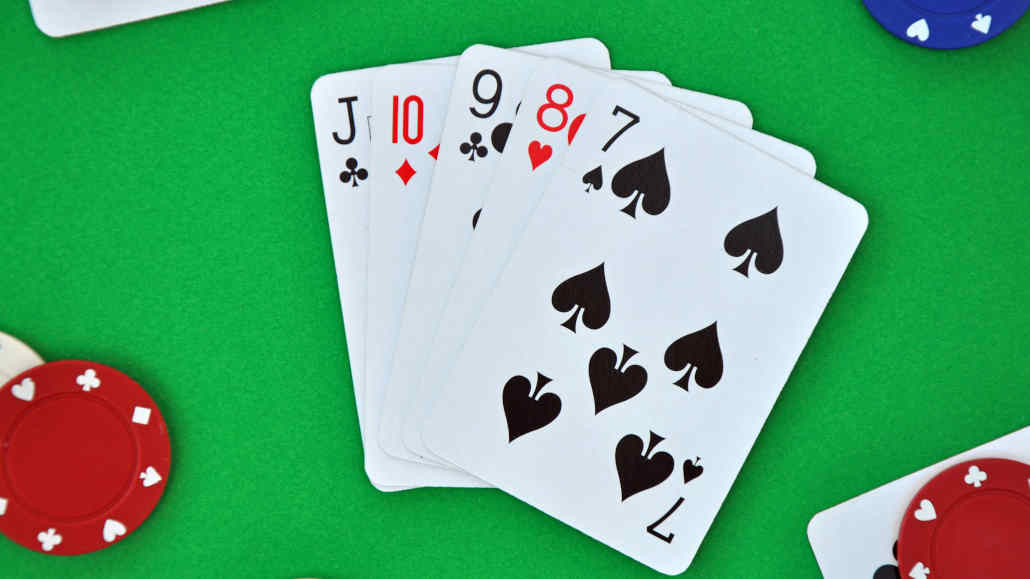
The term gutshot is fundamental in poker vocabulary. It describes a situation where you hold four of the five cards needed for a straight, but the missing card is 'inside' the sequence. For example, if your hand is 5-6-8-9, you have a gutshot draw because you specifically need a 7 to complete your straight. This is distinct from an open-ended straight draw (like 5-6-7-8), which can be completed by two different cards (a 4 or a 9).
Because you only have one specific card rank that improves your hand, a standard gutshot only has four outs (four 7s in our example). This makes it a long-shot draw with a relatively low probability of hitting.
Gutshot vs. Open-Ended Straight Draw
The primary difference lies in the number of 'outs' or cards that complete your hand. Understanding this distinction is crucial for calculating your odds and making profitable decisions.
| Draw Type | Example Hand | Outs | Approx. Chance to Hit (Flop to River) |
|---|---|---|---|
| Gutshot Draw | TJ-Q-A (needs a King) | 4 | 16.5% |
| Open-Ended Draw | 8-9-T-J (needs a 7 or Queen) | 8 | 31.5% |
As you can see, an open-ended draw has double the outs and roughly double the chance of completing by the river. This makes playing a gutshot a more complex decision that heavily relies on other factors.
How to Play a Gutshot: Strategy and Odds
Knowing you have a weak draw is only half the battle. The real skill is in how you play it. The decision to call, bet, raise, or fold depends on pot odds, your position, and your opponents' tendencies.
Calculating Your Odds
A simple rule of thumb is the 'Rule of 2 and 4'. To estimate your percentage chance of hitting your draw:
- On the flop: Multiply your outs by 4. (4 outs x 4 = 16% chance to hit by the river).
- On the turn: Multiply your outs by 2. (4 outs x 2 = 8% chance to hit on the river).
You should only continue with a poker gutshot draw if the pot odds justify the call. For instance, if the pot is $80 and your opponent bets $20, the total pot is now $100. You have to call $20 to potentially win $100, giving you 5-to-1 pot odds. Your hand odds are roughly 11-to-1 on the turn (47 unseen cards / 4 outs), making this a losing call based on odds alone.
Never chase a gutshot draw purely on its drawing potential. You must have other reasons to stay in the hand, such as implied odds or the opportunity to bluff.
When to Play Aggressively (Semi-Bluff)
Often, the best way to play a gutshot is not as a drawing hand, but as a semi-bluff. Betting or raising gives you two ways to win: your opponent folds immediately, or you hit your card. Consider being aggressive when:
- You are in position: Acting last gives you more information and control.
- You are heads-up: It's much easier to make one player fold than multiple players.
- You have overcards: A hand like A-K on a J-T-2 board has a gutshot to a Queen, but can also win if an Ace or King hits.
When to Fold Your Gutshot
Discipline is key. You should fold your inside straight draw when:
- The pot odds are poor.
- You are facing multiple opponents.
- There is significant aggression (a bet and a raise) before you.
- You have no other equity, like overcards or a flush draw.
Advanced Gutshot Concepts
Not all gutshots are created equal. A 'double gutshot' or 'double belly buster' is a much stronger hand. For example, holding 5-7-8-9-J gives you a draw to a 6 or a 10. This hand has 8 outs, making it as strong as an open-ended straight draw. Always be aware of how your specific cards interact with the board to identify these more powerful drawing opportunities.


