
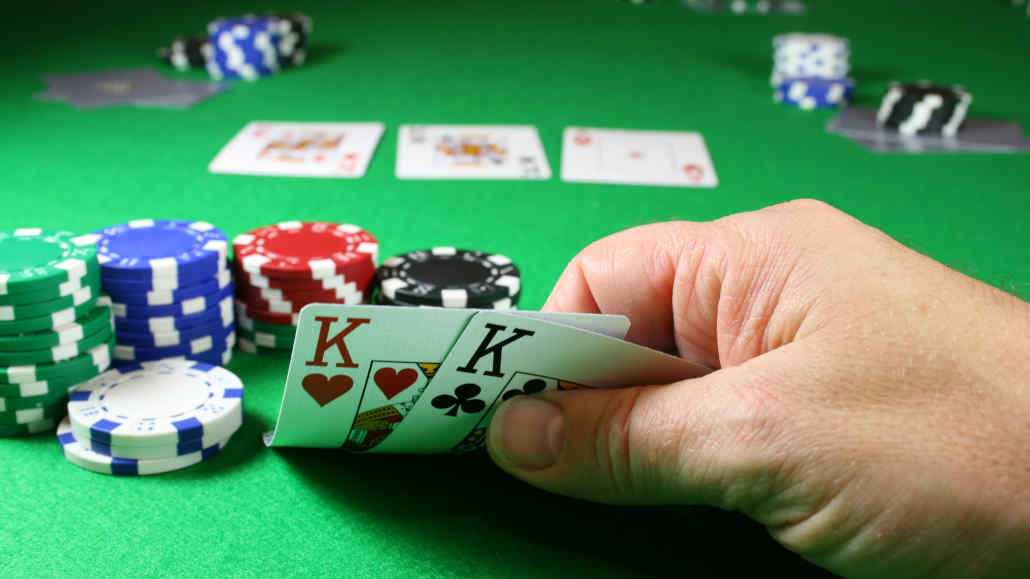


What Exactly Are Poker Outs?
In the world of Texas Hold'em and other poker variants, an 'out' is any card that has not yet been dealt that will significantly improve your hand, likely turning it into the winning hand. Think of them as your pathways to victory. Identifying your poker outs is the first step in moving from a casual player to a strategic thinker who understands the mathematics behind the game.
Instead of just hoping for a lucky card, counting your outs allows you to quantify your chances. It transforms guesswork into a calculated risk, forming the basis for more advanced concepts like pot odds and equity. Knowing you have nine outs to make a flush is much more powerful than simply feeling 'lucky'.
Why Counting Outs is a Crucial Poker Skill
Mastering the ability to count your outs is fundamental to long-term success in poker. It directly influences every decision you make after the flop. By understanding your probability of hitting a winning card, you can determine if the potential reward of winning the pot justifies the risk of calling a bet. This is the core of profitable poker strategy.
Knowing your outs is the difference between gambling and making a calculated investment. It gives you the data needed to decide if staying in a hand is a smart play or a losing proposition.
How to Count Your Outs: A Step-by-Step Guide
Counting your outs is a straightforward process once you understand the logic. It involves looking at your current hand and the community cards on the board, then determining which cards left in the deck will complete your draw.
Example 1: The Flush Draw
Imagine you hold A♥ K♥. The flop comes down 7♥ Q♣ 2♥. You have four hearts towards a flush. To calculate your outs:
- A standard deck has 52 cards.
- There are 13 cards of each suit (hearts, in this case).
- You know the location of four hearts (two in your hand, two on the board).
- Therefore, there are 9 hearts (13 - 4) remaining in the deck.
You have 9 outs to complete your flush.
Example 2: The Open-Ended Straight Draw
Now, let's say your hand is 8♠ 9♠ and the flop is 10♥ J♦ 2♣. You have 8, 9, 10, J, which means any 7 or any Queen will complete your straight. To calculate your outs:
- There are four 7s in the deck.
- There are four Queens in the deck.
- This gives you a total of 8 outs (4 + 4) to hit your straight.
A Shortcut for Calculating Your Odds: The Rule of 2 and 4
Once you know your number of outs, you can quickly estimate your chances of hitting one of them using a simple trick called the 'Rule of 2 and 4'.
- On the Flop: Multiply your number of outs by 4 to get your approximate percentage chance of hitting your hand by the river (with two cards to come).
- On the Turn: Multiply your number of outs by 2 to get your approximate percentage chance of hitting your hand on the river (with one card to come).
Using our flush draw example (9 outs): on the flop, you have roughly a 36% (9 x 4) chance of making your flush by the river. If you miss on the turn, your chance drops to about 18% (9 x 2) on the river.
Common Poker Draws and Their Outs
Here is a quick reference table for some of the most common drawing hands in Texas Hold'em. Memorizing these will speed up your calculations at the table.
| Draw Type | Number of Outs | Example Hand & Board |
|---|---|---|
| Flush Draw | 9 | A♥K♥ on a 7♥Q♣2♥ board |
| Open-Ended Straight Draw | 8 | 8♠9♠ on a 10♥J♦2♣ board |
| Two Pair (drawing to a Full House) | 4 | A♦K♥ on an A♠K♣7♦ board |
| Gutshot Straight Draw | 4 | 8♠9♠ on a 7♥J♦2♣ board (needs a 10) |
| Set (drawing to a Full House or Quads) | 7 | 5♠5♥ on a 5♣J♦A♠ board |
Advanced Concept: Discounted Outs
A crucial part of an effective poker strategy is recognizing that not all outs are good for you. A 'discounted out' is a card that completes your hand but could simultaneously give an opponent an even better hand. For example, if you have a straight draw, but hitting your out also completes a possible flush for an opponent, you should 'discount' that out from your calculations because it might make you lose an even bigger pot. Always consider the board texture and your opponents' likely holdings before counting all your outs as clean.


