


What is Pai Gow Poker?
Created in the 1980s, Pai Gow Poker blends elements of American poker with the Chinese domino game Pai Gow. It's a fun and relatively slow-paced card game where you compete against the banker, not other players. Understanding the fundamentals is key, so this guide will teach you exactly how to play Pai Gow Poker, from the basic rules to winning strategies.
Pai Gow Poker Rules Explained
Pai Gow Poker is played with a standard 52-card deck plus one Joker. The Joker acts as a wild card, but with specific limitations. It can be used to complete a straight, a flush, a straight flush, or it can act as an Ace. If it cannot be used for any of those combinations, it is always an Ace.
The game is played on a table with up to six players and a dealer. A key feature of this game is the concept of the 'House Way.' This is a predetermined set of rules the dealer must follow when setting their hand, which can vary slightly between casinos. Understanding the local House Way can help you refine your own Pai Gow Poker strategy.
The Role of the Banker
What makes this game unique is that players can take turns acting as the banker. As the banker, you bet against all other players, and you win on any copy hands (ties). You also have the freedom to set your hand however you wish, ignoring the House Way. However, being the banker requires a substantial bankroll to cover all player bets, so many players choose to pass on the opportunity.
The standard house edge in Pai Gow Poker is around 2.7%. Acting as the banker optimally can slightly reduce this edge.
Be aware that many casinos charge a 5% commission on winning bets. It's always a good idea to check for this rule before you sit down to play.
How to Play Pai Gow Poker: A Step-by-Step Guide
Learning how to play Pai Gow Poker is straightforward once you understand the flow of a hand. Here’s a simple breakdown of a round:

- Place Your Bet: The game begins with each player placing their wager in the designated betting circle.
- Receive Your Cards: The dealer gives each player, and themselves, a hand of seven cards.
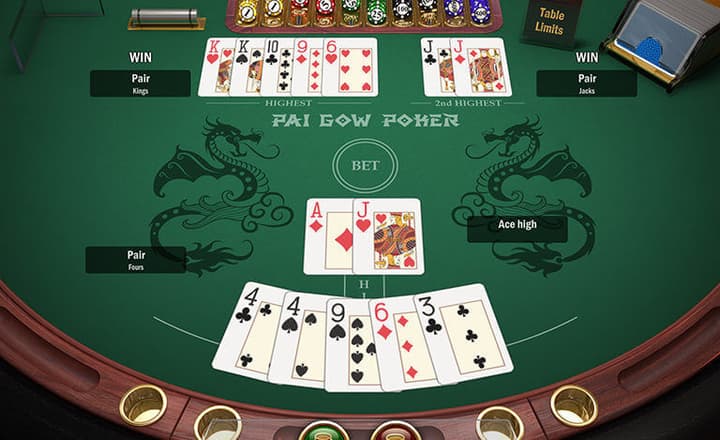
- Set Your Hands: You must split your seven cards into two hands: a five-card hand (the 'high hand') and a two-card hand (the 'low hand'). The crucial rule is that your five-card hand must always be higher in rank than your two-card hand. Failure to do so results in a 'foul' and an automatic loss.
- The Showdown: Once all players have set their hands, the dealer reveals their cards and sets them according to the House Way. Then, players' hands are compared to the dealer's hands.
Winning, Losing, and Pushing
There are three possible outcomes when your hands are compared to the banker's:
- You Win: If both your high and low hands beat the banker's high and low hands, you win your bet (usually at 1:1 odds, minus any commission).
- You Lose: If both of the banker's hands beat yours, you lose your bet.
- It's a Push: If you win one hand and lose the other, it’s a push. No money is exchanged, and you get your bet back. This happens frequently in Pai Gow Poker.
Remember, all ties go to the banker. If your high hand is identical to the banker's high hand, the banker wins that comparison.
Pai Gow Poker Hand Rankings
The Pai Gow Poker hands for the five-card hand use standard poker rankings. The two-card hand can only be a pair or a high card.
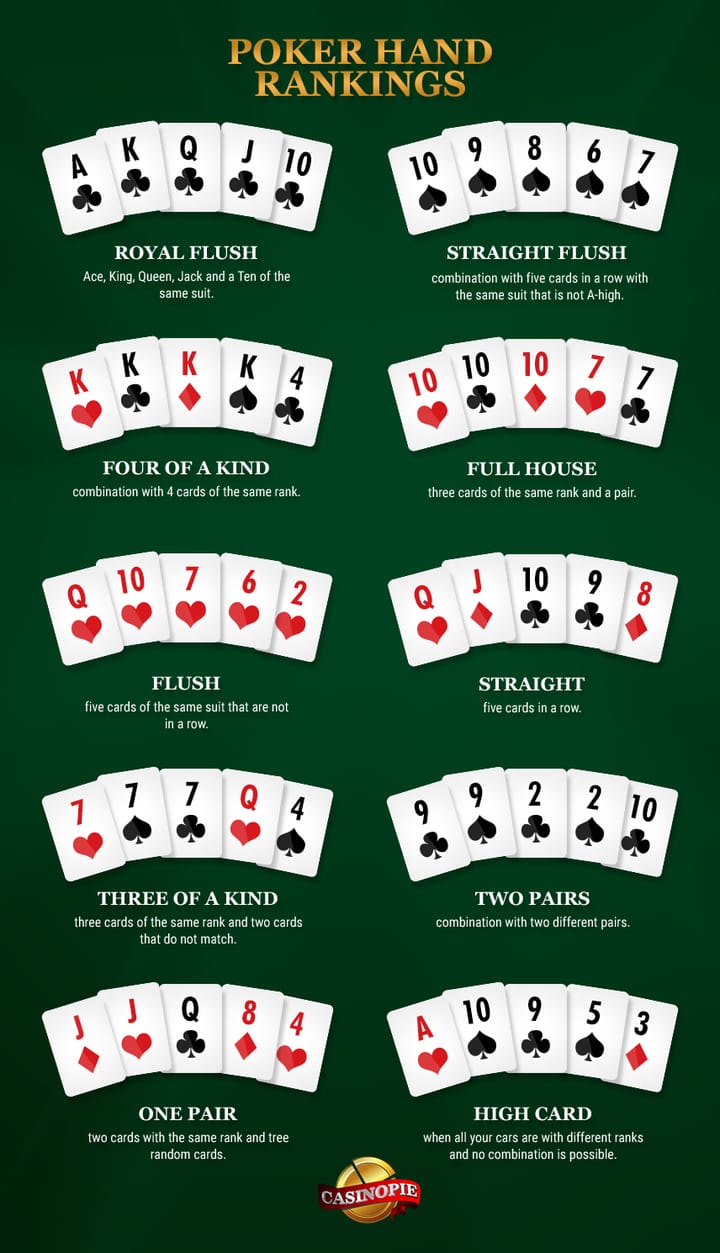
Five-Card Hand Rankings (High to Low)
- Five Aces (Four Aces + Joker)
- Royal Flush
- Straight Flush
- Four of a Kind
- Full House
- Flush
- Straight (Note: A-2-3-4-5 is often the second-highest straight)
- Three of a Kind
- Two Pair
- One Pair
- High Card
Two-Card Hand Rankings (High to Low)
- Pair of Aces
- Pair of Kings
- ...down to a pair of Twos
- Ace-King high
- Ace-Queen high
- ...down to 3-2 high
Pai Gow Poker Payouts and Bonus Bets
The main game in Pai Gow Poker offers a simple 1:1 payout on your bet. However, many tables offer optional side bets or bonus bets that provide much larger Pai Gow Poker payouts for strong hands, regardless of whether you beat the dealer.

Payouts for these bonus bets vary by casino but often look like this:
- 7-Card Straight Flush: 8,000:1
- Five Aces: 400:1
- Royal Flush: 150:1
- Straight Flush: 50:1
- Four of a Kind: 25:1
- Full House: 5:1
Basic Pai Gow Poker Strategy
Your success in this game depends entirely on how you set your two hands. While complex strategies exist, following a few simple rules will put you in a good position against the house.

- No Pair: Place your highest card in the high hand and your next two highest cards in the low hand.
- One Pair: Always keep the pair in your five-card high hand. Place your two highest-ranking single cards in the low hand.
- Two Pairs: This is tricky. Generally, you should split them. Place the higher-ranking pair in the high hand and the lower-ranking pair in the low hand. However, if you have two low pairs, it can be better to keep them together in the high hand and play your next two highest cards in the low hand.
- Three Pairs: Always play the highest pair in your two-card low hand.
- Three of a Kind: Keep the three of a kind in your high hand. An exception is with three Aces, where you might split them by placing a pair of Aces in the high hand and an Ace-high in the low hand.
- Straights and Flushes: If you have a straight or flush, you generally want to keep it together in your high hand, unless you also have two pairs. In that case, you should consider splitting the pairs as described above to create two strong hands.
Is Pai Gow Poker Right for You?
Pai Gow Poker is an excellent choice for players who want a more relaxed casino experience with less volatility. The high frequency of pushes means your bankroll can last longer than in faster-paced games. While it might not be as common as blackjack or roulette, it's a staple in many casinos and is worth trying for a fun and strategic card game experience.


