

The Objective: How to Play Blackjack
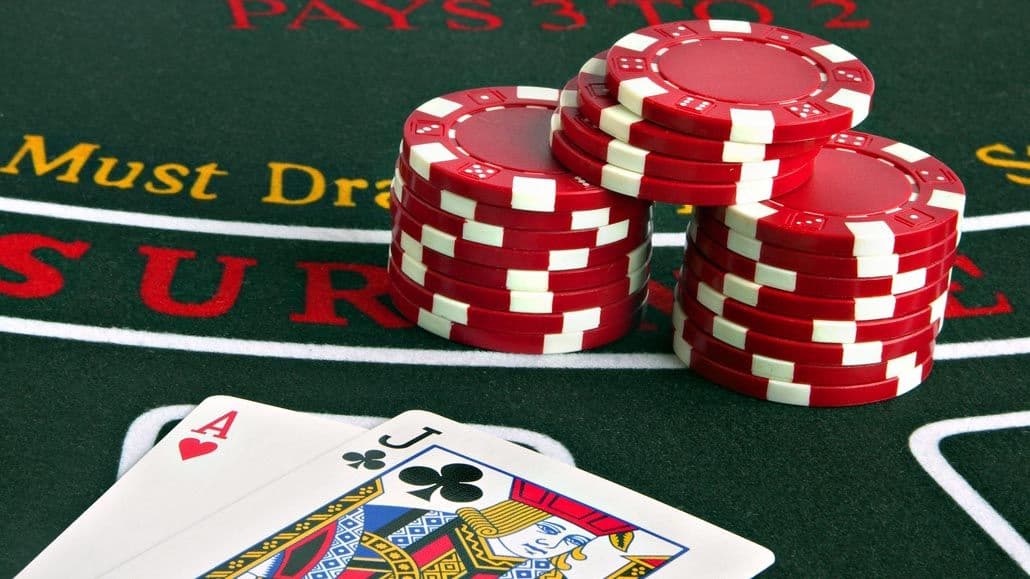
Blackjack is a thrilling casino game where you play directly against the dealer, not other players. The primary goal is simple: create a hand with a total value higher than the dealer’s hand without going over 21. If your hand total exceeds 21, it's a 'bust,' and you lose the round automatically. Understanding these fundamental blackjack rules is the first step to success.
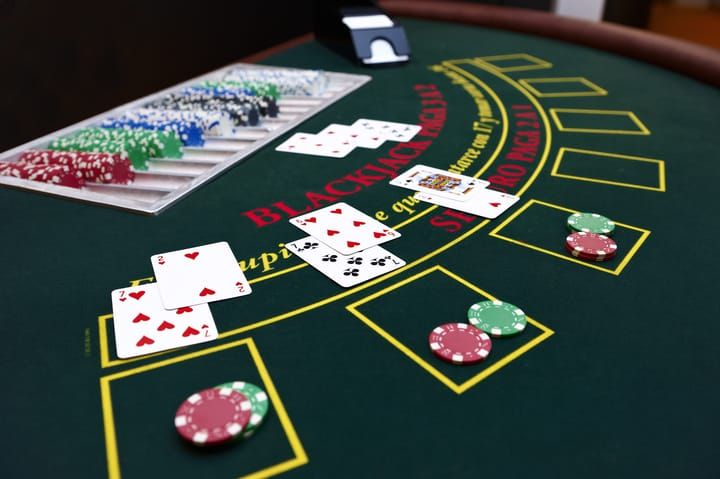
The dealer manages the game, dealing cards, handling bets, and paying winners. A standard blackjack table is semi-circular and can seat up to seven players.
Step-by-Step Gameplay
While it might seem complex at first, blackjack follows a straightforward sequence. Here’s how a typical round unfolds:
- Place Your Bet: The game begins when all players place their bets in the designated area.
- The Deal: The dealer gives two cards to each player and two to themselves. Players' cards are usually face up, while the dealer has one card face up (the 'upcard') and one face down.
- Player's Decision: Starting from the left, each player decides how to play their hand based on their cards and the dealer's upcard. We will cover these options below.
A key rule to remember is that the dealer must generally hit on a hand valued at 16 or less and stand on a hand valued at 17 through 21.

Understanding Blackjack Card Values
Learning the card values is crucial for knowing how to play blackjack. Fortunately, the system is very simple, and card suits have no meaning in the game.
- Numbered Cards (2-10): These cards are worth their face value.
- Face Cards (Jack, Queen, King): All face cards are valued at 10 points.
- The Ace: The Ace is unique. It can be worth either 1 or 11 points, whichever is more advantageous for your hand.
Hard Hand vs. Soft Hand Explained
The flexibility of the Ace creates two types of hands: hard and soft.
A soft hand is any hand that includes an Ace counted as 11. For example, an Ace and a 7 is a 'soft 18.' A hard hand is any hand without an Ace, or one where the Ace must be counted as 1 to avoid busting.
Soft hands are generally better because they give you more flexibility; you can never bust by taking one more card on a two-card soft hand.
Your Playing Options: Key Blackjack Decisions
After you receive your first two cards, you have several options. Your choice will depend on your hand's value and the dealer's visible card.
Hitting
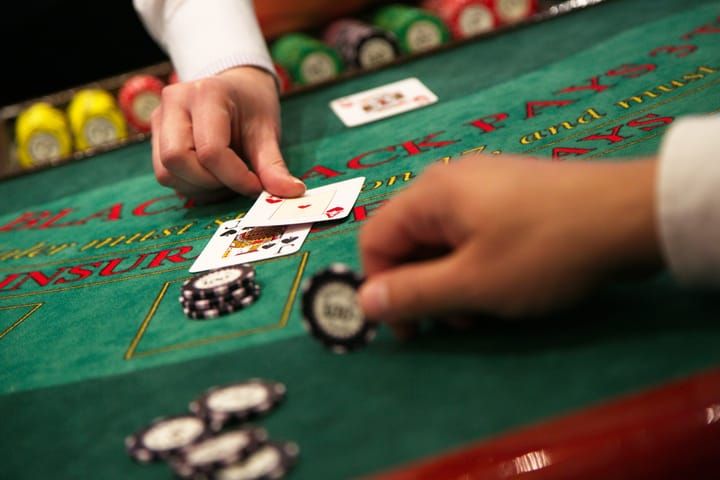
To 'hit' means to request another card from the dealer. You can hit as many times as you like until you decide to stand or your hand value exceeds 21.
Standing
To 'stand' means you are satisfied with your current hand and do not want any more cards. Your turn is over, and play moves to the next person.
Doubling Down
This option allows you to double your initial bet in exchange for receiving only one more card. It's a strategic move typically used when you have a strong starting hand (like a total of 10 or 11) and believe one more card will give you a winning total.
Splitting Pairs
If your first two cards are a pair (e.g., two 8s or two Kings), you can 'split' them into two separate hands. You must place an additional bet equal to your original wager. You then play each hand independently.
Surrendering
Some casinos offer the 'surrender' option. If you believe your hand is unlikely to win, you can forfeit it and get back half of your original bet. This must be done after the dealer checks for blackjack but before you take any other action.
Becoming a Winning Blackjack Player
Blackjack is a game of both luck and skill. While you can't control the cards you're dealt, you can control your decisions. By learning basic strategy, you can significantly reduce the casino's 'house edge'.
A casual player faces a house edge of around 2%, but a player using a solid basic strategy can lower that to under 1%, making it one of the most player-friendly games in the casino.
Learning when to hit or stand is the cornerstone of any blackjack strategy. With practice and a solid understanding of the blackjack rules, you can improve your odds and have more fun at the table.