
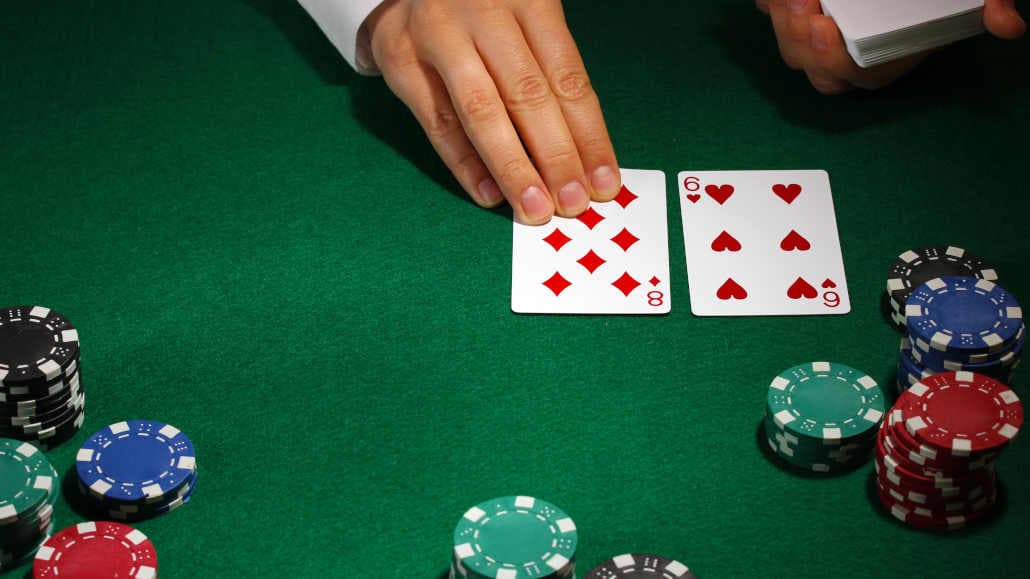


What Are Outs in Poker?
In poker, an 'out' is any card remaining in the deck that can improve your hand, ideally making it the winning hand. When you're on a draw, like a flush draw or a straight draw, counting outs is the first step to figuring out if it's profitable to continue in the hand.
Essentially, if a card can turn your current hand into a stronger one that you believe will beat your opponent, that card is an out.
Of course, since you can't see your opponent's cards, there's always an element of educated guessing. You are counting the cards that make your hand strong enough to win based on your read of the situation.
For example, imagine you hold K♠ Q♠ and the flop comes J♠ T♠ 6♦. Right now, you only have King-high, which is a very weak hand. However, many cards could come on the turn or river to give you a powerhouse hand. These cards are your outs.

Any Ace or 9 would complete your straight. Any spade would complete your flush. These are all considered outs because they dramatically improve your holding.
How to Count Outs in Poker
Let's continue with the same example: you have K♠ Q♠ on a J♠ T♠ 6♦ board. This is an open-ended straight flush draw, one of the most powerful draws in Texas Hold'em.
To calculate your outs, you break it down:
- Flush Outs: There are 13 spades in a deck. You hold two, and two are on the board. That leaves 9 spades remaining.
- Straight Outs: Any Ace (4 cards) or 9 (4 cards) completes your straight. That's 8 cards in total. However, we've already counted the A♠ and 9♠ in our flush outs. So, we add the remaining 6 straight outs (3 Aces and 3 Nines of other suits).
Combining these gives you 9 + 6 = 15 'clean' outs. These are cards that will almost certainly give you the best hand. In some situations, a King or Queen could also be an out if it gives you the top pair and that's enough to win. That would add another 6 outs, bringing the total to 21, but these are less reliable.
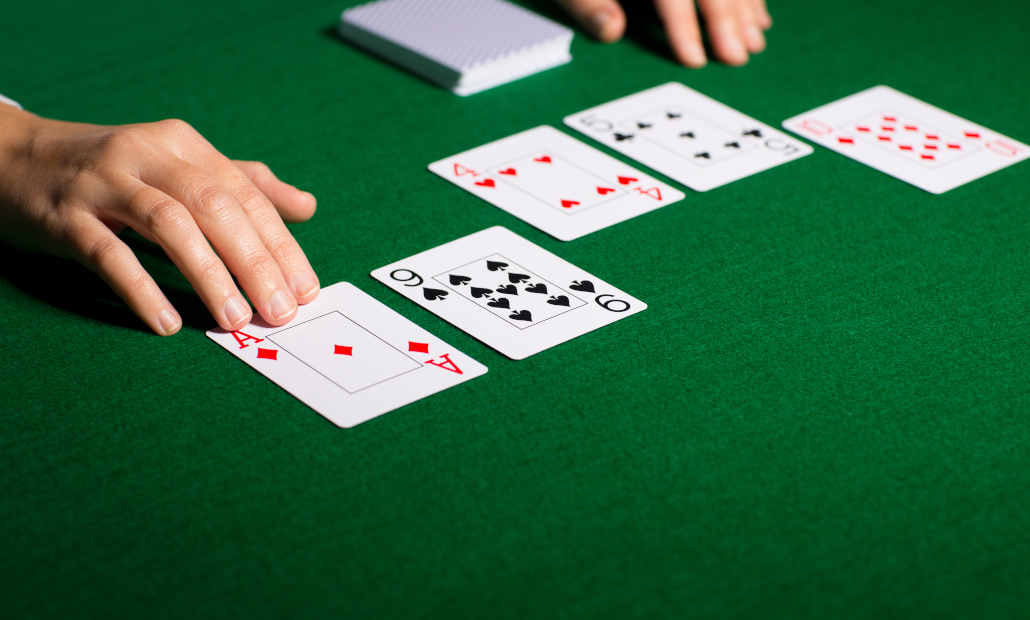
Why Should You Count Your Outs?
Counting your outs is not just a mental exercise; it directly informs your strategy. When you're facing a bet with a drawing hand, knowing your number of outs is critical for making the correct decision: call, fold, or raise.
The more outs you have, the greater your equity (your percentage chance of winning the pot). High equity allows you to profitably call bets. It can also give you the confidence to play your draw aggressively, such as making a semi-bluff raise. This puts pressure on your opponent and gives you two ways to win: by hitting your hand or by forcing them to fold.
The Rule of Two and Four
The 'Rule of Two and Four' is a simple shortcut for converting your outs into an approximate percentage of hitting your hand. It's an essential piece of poker math.
- On the flop: Multiply your number of outs by 4 to estimate your chance of hitting by the river.
- On the turn: Multiply your number of outs by 2 to estimate your chance of hitting on the river.
For a flush draw (9 outs) on the flop, your chance of hitting by the river is roughly 9 x 4 = 36%. If you miss on the turn, your chance of hitting on the river is 9 x 2 = 18%. This quick calculation helps you compare your winning chances against the pot odds to see if a call is profitable.

Advanced Concepts: Bluff Outs and PLO
Beyond your direct outs, some cards can improve your bluffing opportunities. These are sometimes called 'bluff outs' or 'scare cards'. For example, if you have a straight draw on a two-suited board (e.g., 8♦ 7♦ on 5♠ 6♠ K♣), any spade on the turn could be a scare card. You can represent the flush and potentially bluff your opponent off a better hand, even if you don't improve.
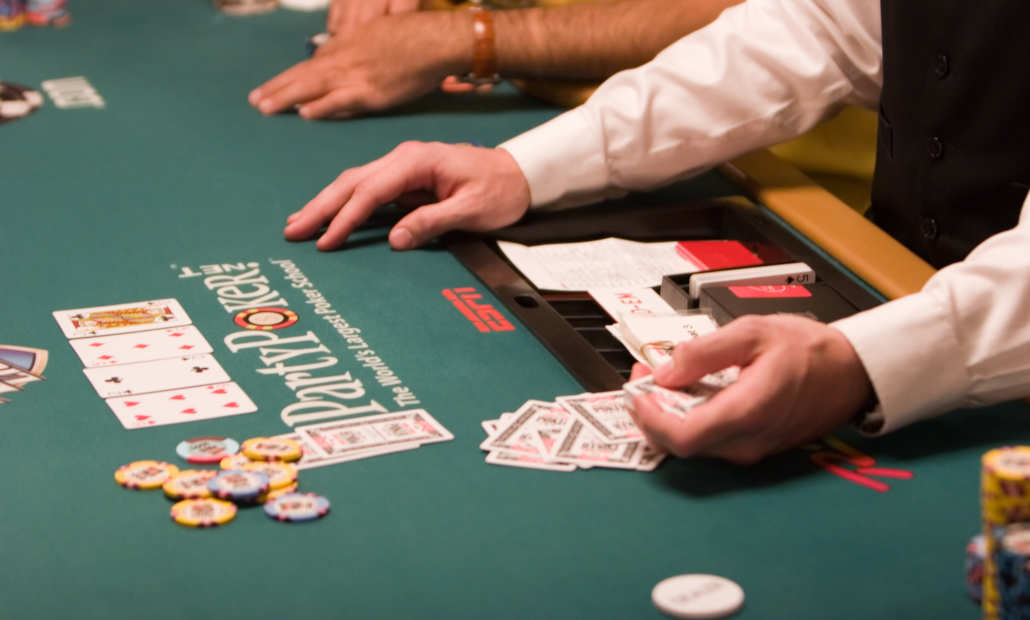
In Pot Limit Omaha (PLO), counting outs is even more critical because players start with four cards, leading to massive drawing hands. The process is the same, but you must be more selective. In PLO, you should primarily focus on counting outs to the nuts (the best possible hand), as making a second-best hand can be a costly mistake.
Counting Outs is Just the Beginning
Learning how to count outs in poker is a foundational skill. It's the building block for more advanced strategic concepts like pot odds, implied odds, and range construction. Practice this skill every time you play. It will become second nature and provide the mathematical basis you need to make consistently profitable decisions at the poker table.


