


What Does 'Air' Mean in a Poker Context?
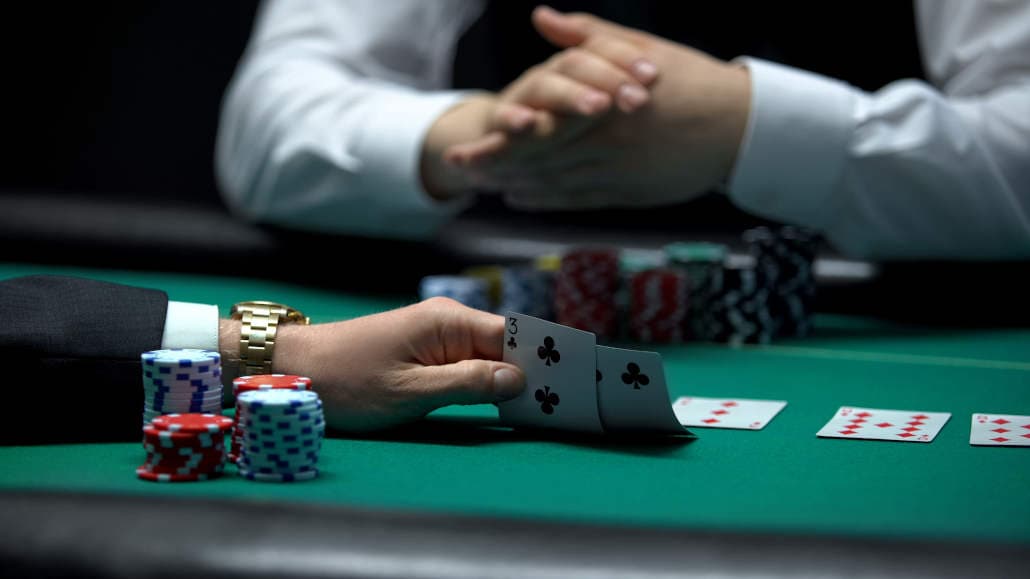
When you hear a player say they 'had nothing but air,' it means their hand had no showdown value. This is the cornerstone of a pure bluff. Unlike a semi-bluff, where you have a draw with the potential to improve to a winning hand, air in poker is a complete brick. You are betting not on the strength of your cards, but on the weakness of your opponent's will.
Imagine a Texas Hold'em game. The community board shows K♠ J♠ 4♦ 2♥ 7♣. You hold 9♦ 8♦. Your hand has no pair, no straight, and no flush. It has no realistic chance of winning if the hand goes to showdown. This is a perfect example of holding 'air.' Your only path to victory is to make a bet so convincing that your opponent folds a better hand.
The Psychology of Bluffing with Nothing
Playing with air is a mind game. The strategy isn't about the cards you hold; it's about the story you tell with your bets. A successful bluff with a nothing hand involves representing a strong hand that makes sense with the cards on the board.
Expert players don't bluff randomly. They choose their spots carefully, considering the board texture, their table image, and their opponent's tendencies. A bluff with air is an aggressive, calculated risk.
For your bluff to be credible, your betting pattern throughout the hand must support the strong hand you're pretending to have. If the board has three spades, a large bet on the river could represent the flush, forcing players with one or two pairs to make a difficult decision.
Key Differences: Air vs. Semi-Bluff
It's crucial to distinguish between a pure bluff (with air) and a semi-bluff. While both involve betting aggressively without a made hand, their foundations are entirely different. A semi-bluff has outs, or cards that can come on the turn or river to improve your hand to a likely winner.
| Feature | Air (Pure Bluff) | Semi-Bluff |
|---|---|---|
| Showdown Value | Zero | Potential value (if draw completes) |
| Equity | Very low or none | Has some equity based on outs |
| Goal | Force a fold (only way to win) | Force a fold or improve to the best hand |
| Example | Betting with 9-high on a K-J-4 board | Betting with a flush or straight draw |
When Should You Try Playing with Air?
Bluffing with a nothing hand is a high-risk, high-reward poker strategy. It shouldn't be done frequently, but in the right situation, it can be extremely profitable. Consider these factors:
- Opponent Type: This play works best against tight, conservative players who are more likely to fold under pressure. Avoid trying it against 'calling stations' who will call with any marginal hand.
- Table Image: If you've been playing tight and only showing down strong hands, a bluff is more likely to be believed. If you've been playing loose and aggressively, your opponents may be more inclined to call.
- Position: Bluffing is generally easier and more effective when you are in a late position (like on the button), as you have more information about your opponents' actions.
Ultimately, understanding air in poker is fundamental to mastering the art of the bluff. It's a testament to the fact that poker is a game of skill and psychology, not just the cards you are dealt. Using it effectively can add a powerful and unpredictable weapon to your strategic arsenal.


