
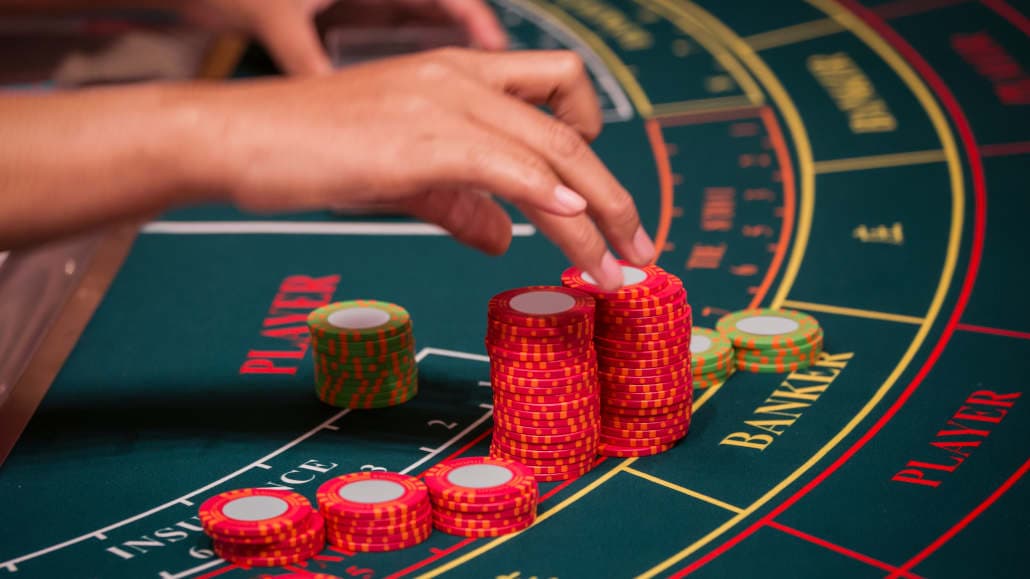


Understanding the Allure of Baccarat
Often seen in movies as the game of choice for sophisticated spies and wealthy tycoons, Baccarat is a casino card game with an air of elegance and exclusivity. However, behind this glamorous facade is one of the simplest and most player-friendly games on the casino floor. The core of the Baccarat game is a straightforward guess: which of two hands, the 'Player' or the 'Banker', will have a point total closest to 9? It's this simplicity, combined with a very low house edge, that makes it a favorite for both new players and seasoned gamblers.
The Objective: Aiming for Nine
In every round of Baccarat, two hands are dealt: the Player hand and the Banker hand. You are not the 'Player'; these are just the names for the two hands you can bet on. Your goal is to correctly predict the outcome. There are three possible bets you can make:
- Player Bet: You bet that the Player's hand will win.
- Banker Bet: You bet that the Banker's hand will win.
- Tie Bet: You bet that both hands will have the same total.
How to Play Baccarat: The Rules and Card Values
Learning how to play Baccarat is incredibly easy because there are no complex decisions to make once your bet is placed. The dealer handles all the card drawing based on a fixed set of rules. Your only job is to place your bet and watch the action unfold. Here’s how the card values work:
- Aces: Worth 1 point.
- Cards 2 through 9: Worth their face value.
- 10s, Jacks, Queens, and Kings: Worth 0 points.
When calculating a hand's total, only the last digit matters. For example, if a hand consists of a 7 and an 8, the total is 15. In Baccarat, this hand's value is 5. A hand of a King and a 6 is worth 6. The highest possible hand value is 9.
The Third Card Rule
Whether a third card is drawn for the Player or Banker hand is not a choice. It follows a strict set of table rules, known as the 'tableau'. While you don't need to memorize these rules to play, understanding them can add to your appreciation of the game. Generally, if the Player or Banker has a total of 8 or 9 (a 'natural'), no more cards are drawn. Otherwise, the Player's hand may draw a third card, and the Banker's action depends on the Player's third card.
Comparing Baccarat Bets: Odds and House Edge
The most critical part of any Baccarat strategy is understanding the odds associated with each bet. This is where the game truly shines for savvy players. The house edge represents the casino's built-in advantage on any given wager.
| Bet Type | Payout | House Edge |
|---|---|---|
| Player Bet | 1 to 1 | Approximately 1.24% |
| Banker Bet | 1 to 1 (minus 5% commission) | Approximately 1.06% |
| Tie Bet | 8 to 1 (sometimes 9 to 1) | Over 14% |
Expert gamblers consistently favor the Banker bet. Despite the 5% commission on winnings, it has the lowest house edge, making it the statistically safest bet over the long run. The Tie bet, with its tempting payout, carries a significantly higher risk and is generally avoided by experienced players.
Popular Baccarat Variations
While the core rules remain similar, you might encounter a few different versions of the Baccarat game. The most common form found in casinos worldwide, especially online, is Punto Banco. In this version, the casino banks the game at all times, and the gameplay is guided by the fixed third-card rules mentioned earlier. Other historical variations include:
- Chemin de Fer: A version popular in Europe where players bet against each other, and the role of the Banker rotates around the table.
- Baccarat Banque: Similar to Chemin de Fer, but the Banker role is more permanent and is typically held by the casino or the player with the largest wager.
For most players, understanding Punto Banco is all that's needed to enjoy Baccarat in any modern casino setting.


