
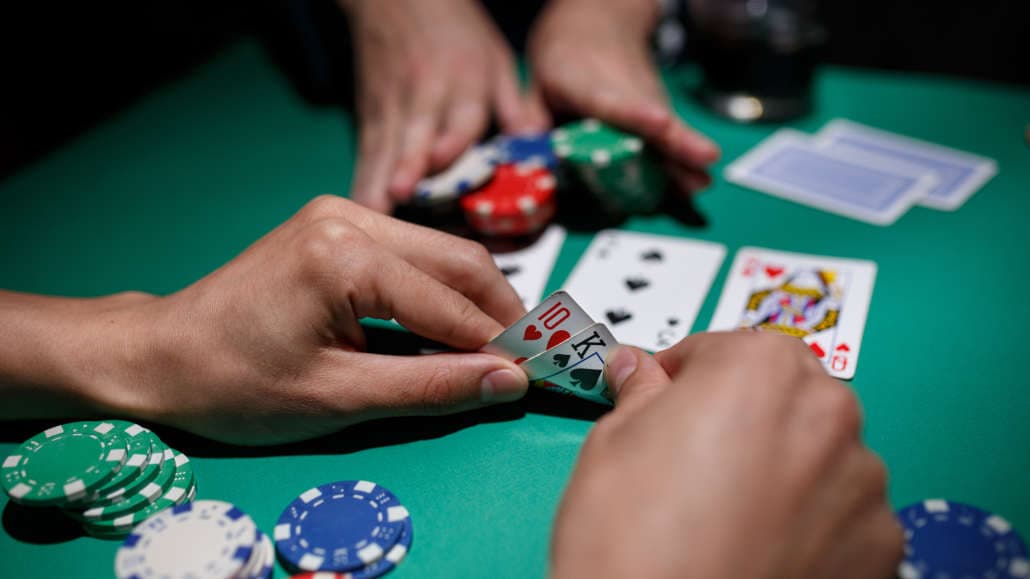


Understanding the Backdoor Draw in Poker
In the world of poker, a backdoor draw is a term you'll frequently hear. It describes a situation where a player needs to catch two specific, sequential cards on the turn and the river to complete a powerful five-card hand. This is also commonly referred to as a 'runner-runner' draw. Unlike a standard draw that only needs one card, the backdoor draw is a two-stage mission, making it much less likely to succeed but far more deceptive when it does.
How a Backdoor Draw Works: From Flop to River
Let's break down the mechanics. After the flop, a player might have three cards to a straight or a flush. To realize their hand, they must hit a helpful card on the turn AND another on the river. This two-card requirement is what defines the backdoor draw.
Example 1: The Backdoor Flush Draw
Imagine you are holding A♥ K♥. The flop comes down 7♥ Q♠ 2♣. At this point, you have three hearts. You need a heart on the turn and another heart on the river to make your nut flush. If the turn is the 9♥ and the river is the 4♥, you've successfully completed your backdoor flush.
Example 2: The Backdoor Straight Draw
Let's say your hand is 8♠ 9♠. The flop is A♦ 7♣ 2♥. You have three cards to a straight (7, 8, 9). You need a 6 on the turn and a 5 on the river (or a 10 and a Jack) to complete the straight. If the turn is the 10♦ and the river is the J♣, you've hit your backdoor straight.
The Math and Strategy Behind Backdoor Draws
Understanding the odds is crucial. The probability of hitting a backdoor draw is quite low. For a backdoor flush draw (needing two specific suits), the odds are approximately 4.2%. This means it will happen roughly once every 24 times. Because of these long odds, chasing them indiscriminately is a losing poker strategy.
Expert Tip: Only consider playing a backdoor draw if you have other ways to win the hand, such as having overcards, a pair, or the right pot odds and implied odds to justify the call.
When Should You Play a Backdoor Draw?
Deciding whether to pursue a runner-runner draw depends on several factors:
- Pot Odds & Implied Odds: The pot must be large enough, or your opponent's stack deep enough, to make the long-shot chase profitable if you hit.
- Position: Being in a late position gives you more information and control over the pot size, making it easier to play backdoor draws.
- Opponent Tendencies: Against aggressive players who bet frequently, you might get the right price to continue. Against tight players, a backdoor hand can be a great way to win a big pot because it's so well disguised.
- Additional Equity: Your hand is much more playable if it has more than just the backdoor potential. For instance, holding two overcards to the board along with a backdoor flush draw gives you more ways to win.
Standard Draw vs. Backdoor Draw Comparison
| Feature | Standard Draw | Backdoor Draw |
|---|---|---|
| Cards Needed | One (Turn or River) | Two (Turn AND River) |
| Probability (Flush) | ~35% from the flop | ~4.2% from the flop |
| Hand Strength | Obvious to opponents | Very disguised |
| Strategy | Often played aggressively | Often played passively/speculatively |
In summary, a what is a backdoor draw question is fundamental for any aspiring poker player. It's a speculative hand with low probability but high potential reward. Mastering when to chase and when to fold these draws separates novice players from seasoned sharks.


