


What Are Blinds in Poker?
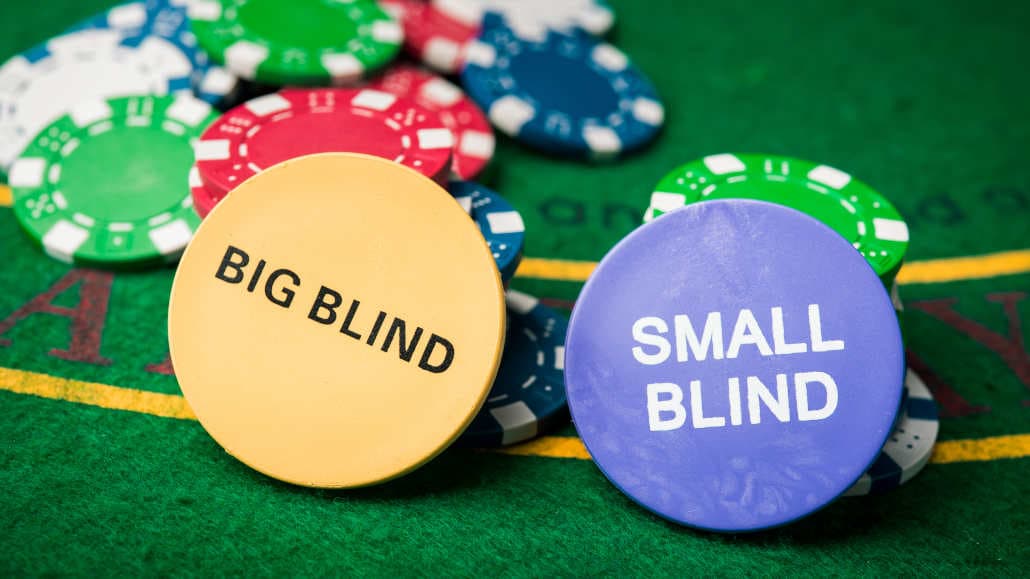
In the world of poker, the action begins before any cards even hit the felt. This is thanks to the poker blinds, which are mandatory, forced bets placed by two players at the table. The term 'blind' is used because these bets are made 'blindly,' without seeing one's own cards. This core mechanic ensures there is always money in the pot to compete for, forming the foundation of every hand in popular poker variants like Texas Hold'em and Omaha.
Without poker blinds, the game would be incredibly slow. Players could simply fold every hand without any cost until they were dealt pocket aces. By forcing a small investment from two players each round, blinds guarantee action and create a dynamic and strategic game.
The Two Types of Poker Blinds: Small and Big
There are two distinct blind positions that rotate around the table with the dealer button. This ensures fairness, as every player will eventually have to post both blinds over the course of a session.
The Small Blind (SB)
The Small Blind is the player seated directly to the left of the dealer button. They are required to post the smaller of the two forced bets. Typically, the small blind is half the size of the big blind. For example, in a $1/$2 No-Limit Hold'em game, the small blind would be $1. After the flop, the Small Blind is the first player to act in all subsequent betting rounds, which is a significant strategic disadvantage.
The Big Blind (BB)
Positioned to the immediate left of the Small Blind, the Big Blind posts the larger of the two forced bets. The size of the big blind sets the minimum stake for the game. Using our $1/$2 example, the big blind is $2. Any player who wants to enter the pot must at least match this amount. The Big Blind is the last to act before the flop, which gives them the advantage of seeing how everyone else has played their hand.
How Blinds Drive the Action: A Step-by-Step Example
Understanding the flow of a hand is crucial. Let's walk through the pre-flop betting round in a $1/$2 No-Limit Hold'em cash game with nine players.
- Blinds are Posted: The player left of the dealer button posts the $1 small blind. The next player posts the $2 big blind.
- Cards are Dealt: Each player receives their two private hole cards.
- Pre-Flop Betting Begins: The action starts with the player to the left of the big blind (known as 'Under the Gun'). They have three options: Fold, Call (match the $2 big blind), or Raise (increase the bet).
- Action Continues Clockwise: Each player in turn has the same options.
- Action Reaches the Blinds: When the action gets to the Small Blind, they can fold (losing their $1), call the remaining amount of the current bet, or raise. The Big Blind acts last and has the option to 'check' if no one has raised, or they can raise themselves.
"The blinds are the heartbeat of the game. They create the pot, define the stakes, and dictate the flow of action. Mastering blind play is the difference between a novice and a seasoned player."
Blinds in Tournaments vs. Cash Games
While the function of poker blinds is the same, their structure differs significantly between cash games and tournaments.
| Feature | Cash Games | Tournaments |
|---|---|---|
| Structure | Blinds are fixed and do not change. | Blinds increase at predetermined time intervals. |
| Purpose | To ensure consistent action and pot size. | To force action, shrink player stacks, and ensure the tournament finishes in a reasonable time. |
| Antes | Rarely used, except in some high-stakes games. | Commonly introduced in later stages to further accelerate the pace of play. |
In tournaments, the escalating blinds are a critical element of strategy. As blinds go up relative to chip stacks, players are forced to take more risks to avoid being 'blinded out' or having their stack dwindle away from the compulsory bets.


