
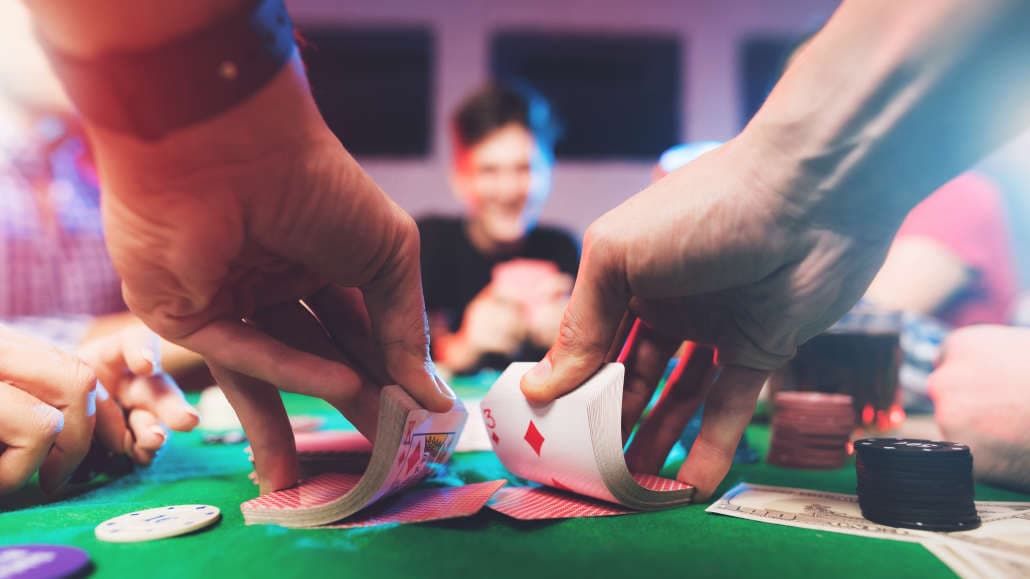


What Exactly is Card Washing?
In the world of casino card games, the term card washing refers to a specific method of shuffling. It involves a dealer spreading all the cards face-down on the gaming table and then using both hands to swirl them around in a random, circular motion. This action looks like someone is 'washing' the cards on the felt, hence the name. It's also sometimes called the 'chemmy shuffle' or simply 'scrambling the deck'.
This technique is a preliminary step in the shuffling process. Its primary goal isn't to organize the cards but to do the opposite: to create complete chaos and break any order from the previous hand. After a thorough wash, the dealer will gather the cards and perform more traditional shuffles, like the riffle or strip shuffle, to prepare the deck for dealing.
The Step-by-Step Process of Washing Cards
While it may look like a random mess, professional dealers follow a consistent procedure for card washing to ensure effectiveness and maintain control over the deck.
- Spread the Deck: The dealer begins by spreading the entire deck of cards face-down in a wide circle on the table.
- Mix and Swirl: Using the palms of both hands, the dealer pushes the cards around, over, and under each other in a continuous washing motion. This continues for about 15 to 30 seconds to guarantee every card has been thoroughly mixed.
- Gather the Cards: Once the wash is complete, the dealer carefully collects all the cards back into a single, manageable pile.
- Follow-Up Shuffles: The wash is always followed by a series of other shuffles, such as several riffle shuffles and a cut, to finalize the randomization process.
Why is Card Washing Necessary in Casinos?
Casinos don't perform the card wash just for show. It serves several critical functions that are vital to the integrity of the games.
A properly washed deck is the foundation of a fair game. It's the first and most important step in preventing any predictability, which is what every player and house manager wants to see.
The main reasons include:
- Ensuring Total Randomness: The primary purpose is to completely randomize the deck. It effectively breaks up pairs, three-of-a-kinds, flushes, or any card sequences that may have formed during the previous round of play.
- Preventing Cheating: Card washing is a powerful tool against advantage players or cheaters who might try to track clumps of cards (clump tracking) or identify sequences. A good wash makes this practice nearly impossible.
- Building Player Confidence: The process is transparent and performed in full view of the players. This visible act of thorough randomization builds trust and assures players that the game is fair and not rigged in any way.
When Do Dealers Perform a Card Wash?
A card wash isn't performed before every single hand, as it's more time-consuming than a standard riffle shuffle. It's reserved for specific situations where ensuring a completely fresh and random deck is paramount.
| Situation | Card Washing Used? | Reason |
|---|---|---|
| Start of a new table/dealer change | Yes | To guarantee a fair start for all players with a completely random deck. |
| Introducing a new deck of cards | Yes | New decks often come in a sequential order from the factory and must be thoroughly mixed. |
| After a long or complex hand | Often | After a round with many cards on the table, a wash ensures those clumps are broken up. |
| Between standard hands | No | A series of riffle and strip shuffles is sufficient and faster for regular play. |
Card Washing vs. Other Shuffling Techniques
It's important to understand that card washing complements other shuffling techniques; it doesn't replace them. A riffle shuffle is excellent at splitting the deck and interleaving the two halves, but it may not be enough to break up severe card clumps on its own. The strip shuffle (or running cuts) is good for changing the order of card packets. The card wash, however, is the only method that addresses the entire deck at once in a completely chaotic manner. Think of it as hitting the reset button on the deck before the finer shuffling methods are applied.


