


The Crucial Role of the Casino Shuffle
In the world of casino gaming, few actions are as fundamental as card shuffling. Before a single hand of poker is dealt or a round of blackjack begins, the deck must be thoroughly randomized. The primary purpose of this process is to remove any existing patterns or sequences in the cards, making the outcome of the game dependent on pure chance rather than a predictable order. A proper casino shuffle is the first line of defense against cheating and ensures a fair card game for all participants.
Why Randomization Matters
Imagine a deck of cards that wasn't shuffled properly. A savvy player might be able to track certain cards or clumps of cards, giving them an unfair advantage. This practice, known as shuffle tracking, is precisely what casinos aim to prevent. By implementing strict shuffling procedures, casinos uphold the integrity of their games and the trust of their patrons. The goal is to achieve a state of randomness where no player, or even the dealer, can know the sequence of cards to come.
Common Card Shuffling Techniques
Dealers are trained in specific shuffling techniques to achieve a consistent and effective randomization of the deck. While players at a home game might use a simple overhand shuffle, professional casino environments demand more robust methods.
The Riffle Shuffle
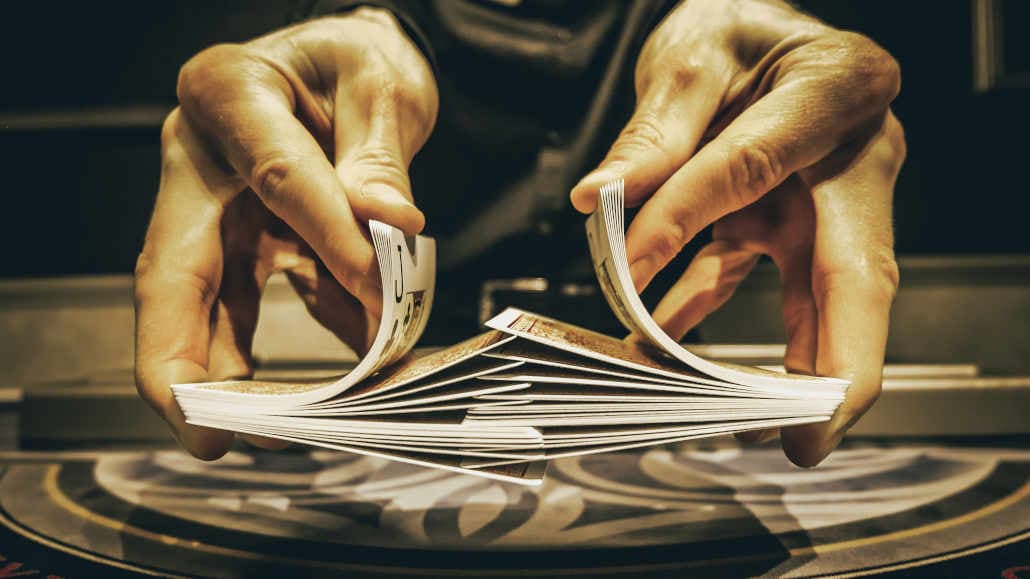
The most iconic casino shuffle is the riffle. The dealer splits the deck into two equal halves, one in each hand. The corners of the two halves are then pushed together, allowing the cards to interlace or 'riffle' into one another. This is typically followed by a 'bridge', where the cards are bent and cascade back into a neat pile. A typical dealer shuffle procedure involves multiple riffles to ensure the deck is thoroughly mixed.
The Wash (or Scramble)
When a new deck is introduced, or at the start of a major poker tournament, dealers often perform a 'wash' or 'scramble'. This involves spreading all the cards face-down on the table and mixing them around in a circular motion with both hands. While it looks chaotic, it's an excellent method for completely breaking up any pre-existing card order before performing more structured shuffles.
The Cut
Following the shuffle, another crucial step is the 'cut'. The dealer places the deck on the table and invites a player to take a portion of the cards from the top and place them on the bottom. This final action ensures that the dealer has not manipulated the top or bottom card of the deck during the shuffle, adding another layer of security.
A perfect shuffle is the foundation of every fair hand dealt. It's the silent promise of integrity we make to every player at the table. It's not just mixing cards; it's manufacturing fairness.
Manual vs. Automatic Card Shufflers
In modern casinos, you'll see both manual shuffles by dealers and machines doing the work. The introduction of the automatic card shuffler has significantly changed the pace and security of many table games. Each method has its own set of advantages and disadvantages.
| Feature | Manual Shuffling | Automatic Shuffler |
|---|---|---|
| Speed | Slower; game pace depends on dealer skill. | Significantly faster, leading to more hands per hour. |
| Security | Relies on dealer integrity and procedure. Vulnerable to human error or manipulation. | High security. Reduces chances of dealer-player collusion or imperfect shuffles. |
| Randomness | Good, but can vary. An unskilled dealer may produce an inadequate shuffle. | Excellent. Machines are designed to produce a consistently random distribution. |
| Player Perception | Often preferred by traditionalists who enjoy the classic casino feel. | Sometimes viewed with suspicion, though they guarantee a fairer shuffle. |
Shuffling in Specific Games
Different games may have slightly different protocols. The poker shuffle routine often involves a riffle, riffle, box (mixing end-to-end), riffle sequence before the cut. In blackjack, many tables now use Continuous Shuffling Machines (CSMs) that constantly shuffle discarded cards back into the shoe. This speeds up the blackjack shuffle process to nearly zero and effectively thwarts card counters, maintaining the house edge.


