


What Does Off-Suit Mean in Poker?
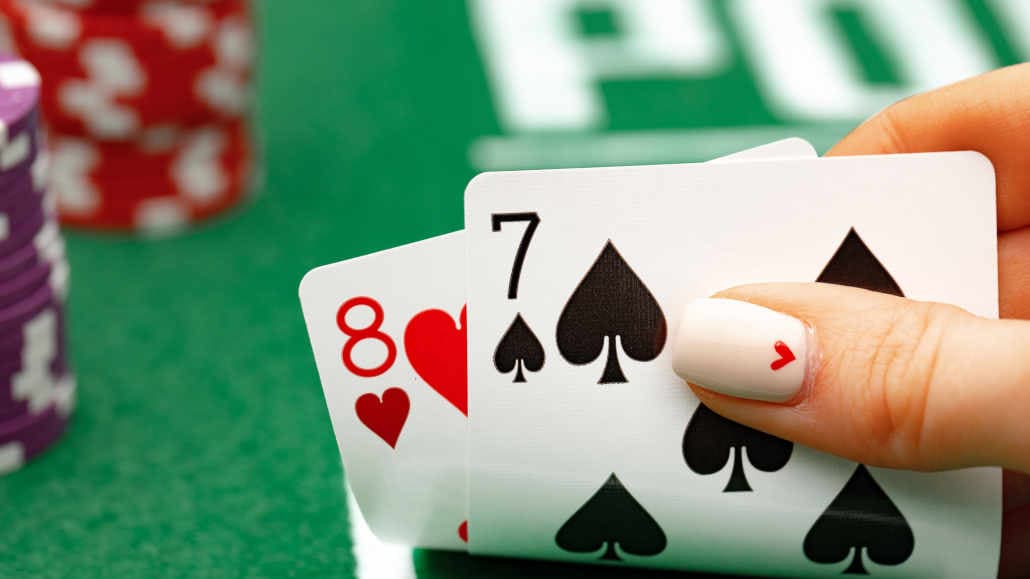
In the world of casino card games, particularly Texas Hold'em and Omaha, the term off-suit is fundamental poker terminology. It simply describes a starting hand where your cards do not share the same suit. For instance, if you are dealt an Ace of Spades (A♠) and a King of Hearts (K♥), you have 'Ace-King off-suit'. This is often abbreviated with an 'o' in poker notation, so Ace-King off-suit becomes 'AKo'.
This is the direct opposite of a 'suited' hand, where the cards share the same suit, like an Ace of Spades (A♠) and a King of Spades (K♠). While the rank of the cards (Ace, King, 7, 2) is the primary driver of a hand's strength, the suit is a crucial secondary factor that significantly impacts its potential after the flop.
Why Are Off-Suit Hands More Common?
It comes down to simple mathematics and card combinations. For any two non-paired card ranks, like Ace and King, there are 16 possible combinations in a 52-card deck. Of these:
- 4 combinations are suited (A♠K♠, A♥K♥, A♦K♦, A♣K♣).
- 12 combinations are off-suit (e.g., A♠K♥, A♠K♦, A♠K♣, A♥K♠, etc.).
This 12-to-4 (or 3-to-1) ratio means you will be dealt an off-suit version of a hand three times more often than its suited counterpart. This frequency makes understanding how to play off-suit poker hands an essential skill.
The Strategic Value: Suited vs. Off-Suit Hands
The primary advantage of a suited hand is its ability to make a flush, one of the strongest hands in poker. An off-suit hand completely lacks this potential. This difference in 'equity' (a hand's percentage chance to win the pot) might seem small pre-flop, but it becomes massive as the hand progresses.
A suited hand adds a backdoor flush draw on many flops, giving it extra ways to win and allowing you to continue in pots where an off-suit hand would have to fold. This added playability is what makes suited hands more valuable.
Let's compare two strong starting hands to see the difference in value:
| Hand | Description | Key Advantage | Strategic Consideration |
|---|---|---|---|
| A♥K♥ (Suited) | Ace-King of the same suit. | Can make the nut flush, a royal flush, straights, and top pair with the best kicker. | Can be played very aggressively. Has excellent potential to win a huge pot. |
| A♥K♣ (Off-Suit) | Ace-King of different suits. | Excellent high-card strength, can make straights and top pair with the best kicker. | Still a premium hand, but its value decreases on single-suit flops where you don't hold a card of that suit. Lacks flush potential. |
How to Play Off-Suit Hands: A Practical Guide
Your strategy for playing unsuited hands should depend heavily on the rank of your cards and your position at the table. Not all off-suit hands are created equal.
Premium Off-Suit Hands (AKo, AQo, KQo)
Hands like Ace-King off-suit (also known as 'Big Slick') and Ace-Queen off-suit are powerhouse starting hands in poker. Their strength comes from their high-card value, which can often win a pot unimproved, and their ability to make the top pair with a strong kicker. These hands should almost always be raised pre-flop to build a pot and narrow the field of opponents.
Off-Suit Connectors (T9o, 87o, 65o)
Off-suit connectors are much trickier. While their suited cousins can make straights and flushes, the off-suit versions can only make straights. This makes them significantly weaker. These hands are best played from late position (like the button or cutoff) where you have more information about your opponents' actions. In early positions, these are typically easy folds.
Weak Off-Suit Hands (72o, 94o, K3o)
The vast majority of off-suit hands are simply junk and should be folded without a second thought, especially from early and middle positions. A hand like 7-2 off-suit is statistically the worst starting hand in Texas Hold'em. Playing these hands will cost you money in the long run. The discipline to fold weak unsuited hands is a hallmark of a strong poker player.


