
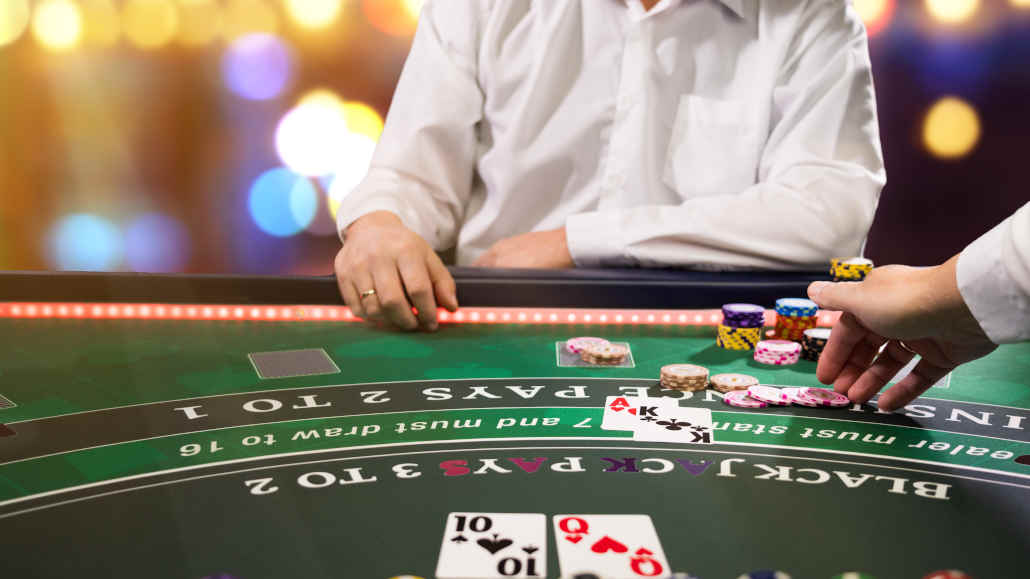


What is Casino Table Hold?
When you walk through a casino floor, you see chips flying and cards being dealt, but how does the casino track its actual earnings from each table? The answer is a key performance indicator known as the table hold. Simply put, table hold is the portion of a player's initial buy-in that the casino keeps as profit. It's expressed as a percentage and represents the casino's actual win from the money exchanged for chips at a specific table.
This metric is a snapshot of real-world performance. While other terms measure theoretical advantage, the table hold tells a casino exactly how profitable a blackjack, roulette, or craps table was during a specific shift, day, or week. It's a practical, essential piece of data for any casino floor manager.
How to Calculate Table Hold Percentage
Calculating the table hold percentage is straightforward. It involves two key figures: the 'drop' and the 'win'.
- The Drop: This is the total amount of cash exchanged for chips at a table. If a player gives the dealer $500 cash for chips, that $500 goes into the drop box, contributing to the total drop.
- The Win: This is the amount of money the casino won at that table. It's calculated by taking the starting chip inventory, adding the drop, and subtracting the final chip inventory.
The formula is:
Table Hold % = (Casino Win / Drop) x 100
For example, let's say a blackjack table has a drop of $20,000 over an eight-hour shift. At the end of the shift, after accounting for all wins and losses, the casino's net win from that table is $4,000. The calculation would be:
($4,000 / $20,000) x 100 = 20%
In this scenario, the table hold for that shift was 20%.
Table Hold vs. House Edge: A Crucial Distinction
Many people confuse table hold with the house edge, but they measure two very different things. Understanding the difference is key to grasping casino mechanics.
"The house edge is what a casino expects to win mathematically over an infinite number of bets. The table hold is what the casino actually won last night. For day-to-day operations, the hold is king."
The house edge is the built-in mathematical advantage the casino has in any given game. It's a theoretical percentage that guarantees casino profitability over the long run. In contrast, the table hold percentage is a short-term, actual result that can be influenced by many factors.
| Feature | Table Hold | House Edge |
|---|---|---|
| Nature | Actual, real-world result | Theoretical, mathematical average |
| Timeframe | Short-term (shift, day, week) | Long-term (millions of bets) |
| Influenced By | Player luck, skill, bet size, game speed | Game rules and payout structures |
| Purpose | Measures operational profitability | Defines the game's inherent advantage |
Why is Table Hold So Important for Casinos?
Casino managers live and breathe by their hold percentages. This single metric provides a wealth of information about the health and performance of the gaming floor.
Performance Analysis
A consistent table hold percentage indicates that a game is performing as expected. Managers can use this data to evaluate the popularity of different games, the effectiveness of dealers, and the impact of different table limits. If a game's hold is consistently below projections, it may be time to investigate why.
Identifying Irregularities
A sudden, sharp dip in table hold can be a major red flag. It could signal several potential issues:
- Advantage Players: A team of skilled card counters at a blackjack table can lower the hold.
- Dealer Error: Inexperienced or sloppy dealers might be making costly mistakes.
- Theft or Cheating: An unusually low hold can trigger a security review to rule out foul play.
Strategic Decision-Making
Hold data informs critical business decisions. A casino might use this information to adjust the mix of games on the floor, change table minimums and maximums, or create promotions to attract players to underperforming tables. For instance, if a new variant of poker has a very high hold, the casino might add more tables to capitalize on its profitability.


