
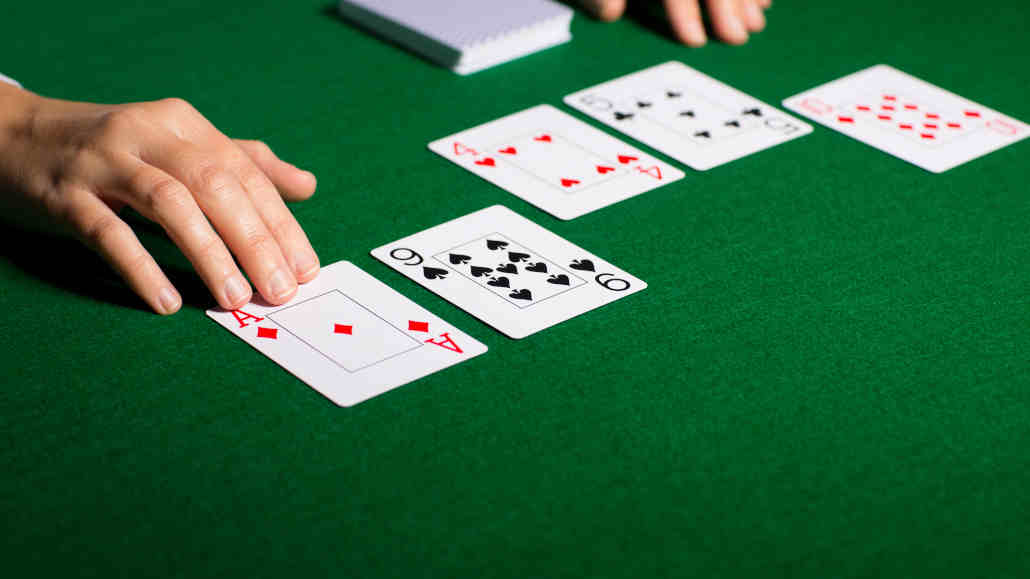


What Are Exposed Cards in a Casino?
The term exposed cards refers to playing cards that are revealed face-up on the table for everyone to see. This situation arises in two primary ways: either as a fundamental part of a game's rules or due to a dealer's error. Understanding the distinction is key, as how an exposed card is handled depends entirely on the context and the specific game being played.
While it might cause a brief pause in the action, casinos have well-defined procedures for every scenario involving an exposed card to maintain the integrity and flow of the game.
Intentional vs. Accidental Exposure
An intentional exposed card is dealt face-up as part of the game's structure. Think of the flop, turn, and river in Texas Hold'em or the 'door card' in Seven-Card Stud. These cards are meant to be shared information, driving betting rounds and strategic decisions.
Conversely, an accidental exposed card is a mistake, usually made by the dealer. This could happen during the shuffle, the cut, or the deal itself. When this occurs, a specific set of house rules comes into play to correct the error fairly.
Rules for Exposed Cards in Different Games
The procedures for handling an exposed card vary significantly from one game to another. What might be a simple fix in blackjack could trigger a full misdeal in poker.
Exposed Card Rule in Poker
Poker has some of the most detailed rules for exposed cards, as a single card's value can drastically alter a player's strategy. While rules can differ slightly between casinos, most follow similar guidelines:
- First or Second Card Exposed: If the first or second card dealt from the deck is exposed, it is almost always declared a misdeal. The cards are collected, reshuffled, and a new hand begins.
- Other Exposed Cards During the Deal: If a card is exposed later in the deal, it is typically not a misdeal. The dealer will complete the deal, and then replace the exposed card with the next card that would have been the first burn card. The exposed card is then shown to all players and placed face down on top of the deck to be used as the burn card.
A good tournament director will always say, 'The goal is to get the hand right and keep the game moving.' The rules for exposed cards are designed to correct errors with minimal disruption while being fair to all players at the table.
Handling Exposed Cards in Blackjack
Blackjack rules are generally more straightforward. If a player's card is dealt face-up by mistake, the hand usually continues as normal. The player has no choice but to play the hand with that card exposed. If the dealer accidentally exposes their hole card (the face-down card), the game also typically continues. Players can use this extra information to inform their betting and hitting decisions, but no special procedure is required.
How Exposed Cards Impact Game Strategy
Any exposed card provides information. In games with intentional face-up cards like poker, this shared information is the foundation of the game's strategy. In the case of an accidental exposure, the information leak can give one or more players a temporary edge. For example, seeing that a card that would complete your straight has been accidentally exposed and will become the burn card lets you know your odds of hitting have just dropped to zero, allowing you to fold a drawing hand confidently.
Exposed Card Scenarios Compared
| Game | Scenario | Common Ruling |
|---|---|---|
| Poker (Texas Hold'em) | First card of the deal is exposed | Misdeal declared. Hand is voided and redealt. |
| Poker (Texas Hold'em) | A player's card is exposed mid-deal | Exposed card is replaced with the next card off the deck after the deal is complete. |
| Blackjack | Player's card is exposed | Play continues as normal. |
| Blackjack | Dealer's hole card is exposed | Play continues as normal; players can use the information. |


