
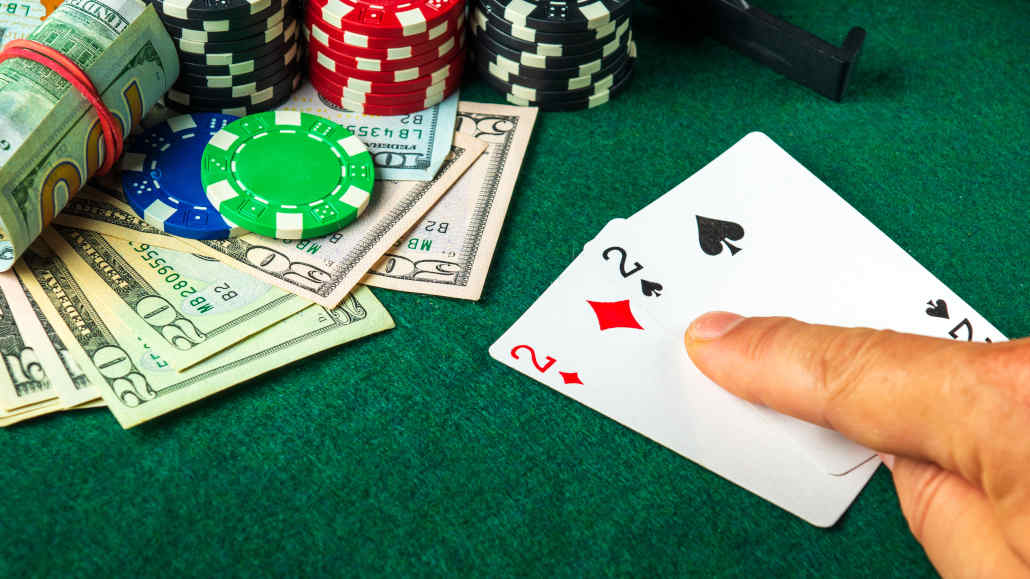


Defining an Underpair in Poker
In the world of poker, an underpair is a specific term used in community card games like Texas Hold'em and Omaha. It describes a scenario where a player's starting hand is a pocket pair that is lower in rank than the lowest card revealed on the board (flop, turn, or river). Recognizing an underpair is the first step to playing it correctly.
Let's look at a clear example. Imagine you are dealt 5♦ 5♣. The flop comes down Q♠ 9♥ 6♦. In this case, your pocket fives are an underpair because the lowest card on the board is the 6♦, which is higher than your 5s. Your hand is vulnerable because any opponent holding a Queen, a 9, or a 6 already has a better pair than you.
Strategic Implications of Holding an Underpair
An underpair is fundamentally a weak hand after the flop unless it improves. The primary way it improves is by hitting a third card of the same rank to make a set (three-of-a-kind). This is often called set mining. Playing an underpair effectively is about balancing the potential reward of hitting a set against the risk of losing chips when you don't.
Expert players often say, 'With small pairs, it's set-or-forget.' This means if you don't hit your set on the flop, you should generally be prepared to fold your underpair to any significant betting action.
How to Play an Underpair: Key Strategies
Your strategy for playing an underpair depends heavily on your position, the actions of your opponents, and the texture of the board.
Pre-Flop Action
Before the flop, small to medium pocket pairs are valuable. You'll often want to see a flop for a relatively cheap price. If there's a single raise, calling is usually the correct play, especially if you have position on the raiser. The goal is to see the flop and hope to connect with it by making a set.
Post-Flop: Set or Fold?
Once the flop is dealt, your decision becomes much clearer. If you miss your set, and the board contains overcards, your hand is now an underpair and very vulnerable. If an opponent bets, you are likely beaten. In most cases, the best move is to fold. Chasing with an underpair without a set is a common way for beginners to lose money.
However, if you do hit your set, your hand becomes very powerful and disguised. For example, if you hold 3♣ 3♠ and the flop is A♥ K♦ 3♦, you have a set of threes. Your opponents with an Ace or a King will feel confident and may bet heavily, allowing you to win a large pot.
Underpair vs. Overpair: Key Differences
Understanding the distinction between an underpair and an overpair is critical for any poker player. They represent opposite ends of the spectrum for pocket pairs after the flop.
| Feature | Underpair | Overpair |
|---|---|---|
| Definition | A pocket pair lower than the lowest card on the board. | A pocket pair higher than the highest card on the board. |
| Example | Holding 4-4 on a K-9-5 flop. | Holding Q-Q on a J-7-2 flop. |
| Relative Strength | Weak and vulnerable. Rarely wins at showdown without improvement. | Very strong. Often the best hand on the flop. |
| Primary Goal | Hit a set (three-of-a-kind) to become a monster hand. | Get value from weaker hands and pairs. |
| Typical Action | Check/fold if you miss your set and face aggression. | Bet/raise for value and protection. |
In summary, an underpair is a speculative hand that requires significant improvement to be valuable. Your main goal is set mining. Conversely, an overpair is a strong, made hand that you should play aggressively to build the pot and protect your equity.


