
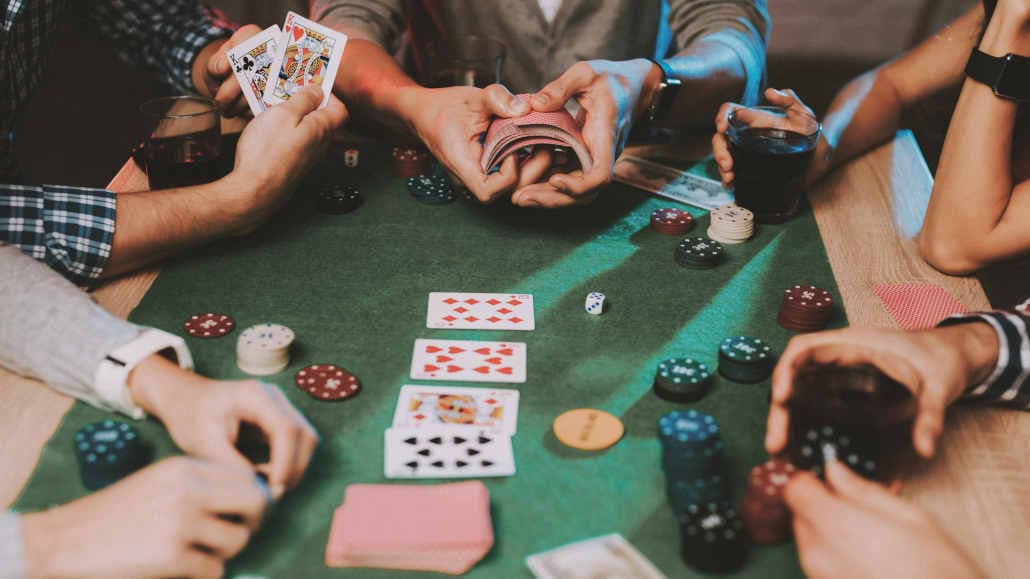


What Defines a Ring Game in Poker?
A ring game poker session, also known universally as a cash game, is the backbone of both live and online poker. The core concept is simple: you play with chips that represent real money. If you buy in for $100, your chips on the table are worth exactly $100. There is no set start or end time; the game runs as long as there are players willing to participate. This flexibility is the main draw for millions of players.
In a typical game of No-Limit Hold'em, the blinds (forced bets) remain constant throughout the session. For example, in a $1/$2 game, the small blind will always be $1, and the big blind will always be $2. This differs sharply from tournaments, where blinds escalate at set intervals to force action. Players can top up their stack if it falls below the maximum buy-in, and they are free to leave the table between hands, cashing out whatever chips they have.
The Flow of a Cash Game
The gameplay loop is straightforward:
- Find a Seat: Players join a table with an open seat that matches their desired stakes.
- Buy-In: You purchase chips, typically with a minimum and maximum buy-in amount. A standard buy-in is 100 times the big blind.
- Play Poker: The game proceeds like any other poker variant, with players trying to win pots.
- Cash Out: When you're ready to stop, you simply get up, take your chips to the cashier, and exchange them for cash.
Ring Game vs. Tournament: A Tale of Two Formats
Understanding the distinction between a ring game and a tournament is crucial for any aspiring poker player. While both use the same hand rankings and rules, their structures create entirely different strategic landscapes. Here's a direct comparison to clarify what is a ring game versus a tournament.
| Feature | Ring Game (Cash Game) | Tournament (MTT/SNG) |
|---|---|---|
| Duration | Continuous, no set end time. | Fixed start time, ends when one player has all chips. |
| Blinds | Constant and do not increase. | Increase at regular intervals. |
| Chips | Direct cash value. | No direct cash value; used for tournament play only. |
| Buy-in & Stacks | Can rebuy or top-up stack at any time. | One buy-in (usually), with limited rebuy/add-on options. |
| Player Count | Players come and go. | Player count decreases as players are eliminated. |
| Payouts | Win/lose money on a per-hand basis. | Only a small percentage of top finishers get paid. |
| Strategy | Focus on deep-stack play and consistent value. | Adapts from deep to short-stack play; survival is key. |
Essential Ring Game Poker Strategy
Success in a poker cash game requires a different mindset than in a tournament. The goal isn't just to survive; it's to maximize profit over the long run. Adopting a solid poker strategy is non-negotiable.
"In a ring game, you're not playing against the clock or rising blinds. You're playing against the other players with deep stacks, which makes post-flop skill paramount."
Bankroll Management: Your First Priority
The most critical skill is bankroll management. Since you can lose your entire buy-in on a single hand, you must play stakes you can afford. A common guideline is to have at least 20-30 full buy-ins for the stake you're playing. For a $1/$2 game with a $200 buy-in, that means having a poker bankroll of $4,000 to $6,000 to weather the variance.
Table and Seat Selection
Don't just sit at any table. Look for games with recreational players who are making obvious mistakes. This is often called "game selection." Once you're at a table, try to get a seat to the left of aggressive or loose players. This gives you a positional advantage, allowing you to act after them and exploit their tendencies.
Playing Deep-Stacked
Most ring games are played with stacks of 100 big blinds or more. This depth means implied odds are more important. Hands like suited connectors and small pocket pairs go up in value because you can win a massive pot if you hit a monster hand. Conversely, hands like a top pair with a weak kicker can become very tricky to play for a large amount of money.
Playing Online vs. Live Poker Ring Games
The core concept of a ring game remains the same whether you're at a brick-and-mortar casino or playing on a website. However, the experience and dynamics of online poker ring games are quite different from live poker. Online poker offers a much faster pace, the ability to play multiple tables at once, and access to a wider variety of stakes, including micro-stakes that aren't available live. Live games are slower, allowing for more social interaction and the opportunity to pick up on physical tells from your opponents.
Ultimately, the ring game is the purest form of poker. It's a continuous battle of wits where sound decisions, patience, and good bankroll management lead to consistent results. It's the ideal format for players who love the game and want the freedom to play on their own terms.


